Opinion
AfCFTA in 2026: Africa’s Biggest Trade Barrier Is Now Execution, Not Ambition


By Lance Chisue
The African Continental Free Trade Area (AfCFTA) represents one of the most ambitious economic integration projects of the 21st century. Uniting 1.3 billion people across more than 54 countries, it stands as the world’s largest free trade area by number of participants, commanding a combined GDP potential exceeding US$3.5 trillion.
Yet five years after trading commenced in 2021, the gap between promise and performance has never been starker.
Despite the Guided Trade Initiative’s expansion, growing momentum behind digital trade protocols, and renewed calls for industrialization and value chain development at the 2026 Africa Trade Summit in Accra, intra-African trade remains stubbornly anchored at approximately 15-18 percent of total continental commerce. This figure falls dramatically short of the 50 percent target that architects of the agreement envisioned, exposing a fundamental truth: Africa’s trade problem is no longer about vision, but about execution.
The Non-Tariff Barrier Crisis
Non-tariff barriers have emerged as the single greatest impediment to continental trade, accounting for roughly 60 percent of trade costs across Africa. While tariff elimination dominates policy discussions, it is the mundane reality of inconsistent customs procedures, duplicative certification requirements, excessive paperwork, protracted border delays, and opaque fee structures that truly stifle commerce.
Corruption compounds these challenges, while weak enforcement of non-tariff barrier reporting mechanisms allows violations to persist unchecked. Small and medium-sized enterprises (SMEs) bear the brunt of this dysfunction.
Unlike multinational corporations with specialized trade compliance departments, SMEs lack the resources to navigate the labyrinth of contradictory regulations that confront them at each border crossing. For these businesses, which should be the primary beneficiaries of regional integration, AfCFTA remains more theoretical aspiration than practical reality.
Infrastructure: The $50 Billion Annual Shortfall
Africa’s infrastructure deficit imposes a punishing 20-30 percent cost premium on intra-continental trade compared to global benchmarks. Roads, railways, ports, airports, and digital connectivity all lag woefully behind requirements for a functioning continental market.
Landlocked nations face particularly acute challenges, their economies hostage to neighbors’ inadequate transport corridors.
Critical trade routes such as Lagos-Abidjan and connections through the Lobito corridor continue to suffer from capacity constraints and poor maintenance. The annual financing gap for addressing these deficiencies exceeds US$50 billion, a figure that dwarfs current investment levels and threatens to perpetuate Africa’s logistical isolation for decades to come.
Regulatory Fragmentation Undermines Integration
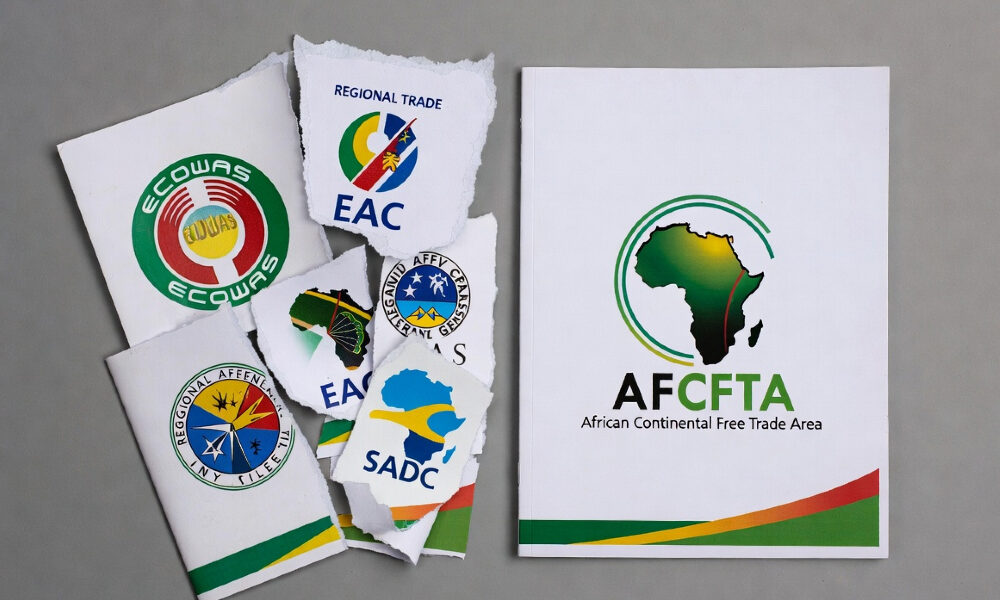
The persistence of overlapping rules from regional economic communities – ECOWAS, EAC, SADC, and others – creates a regulatory maze that confounds even experienced traders. Contradictory tariff schedules, conflicting rules of origin, and divergent trade facilitation procedures mean that businesses often face greater complexity trading within Africa than exporting to Europe or Asia.
Progress on Phase II protocols covering investment, competition policy, intellectual property, and digital trade has proceeded at a glacial pace. Standards harmonization remains incomplete, while disagreements over rules of origin in crucial sectors such as textiles and automotive continue to fester.
Each delay erodes business confidence and postpones the productivity gains that integration should deliver.
Structural Weaknesses Compound Implementation Failures
Beyond policy and infrastructure, structural economic challenges impede AfCFTA’s realization. Many African economies remain narrowly focused on primary commodity exports, limiting opportunities for intra-regional trade in manufactured goods.
Trade finance shortages constrain businesses’ ability to fulfill orders across borders, while information asymmetries leave potential traders unaware of market opportunities.
SME readiness and awareness of AfCFTA provisions remain distressingly low, a failure of both policy communication and business support systems. Political instability in several regions disrupts nascent value chains before they can achieve scale, creating a vicious cycle where unreliability begets isolation.
2026: A Pivotal Year for Action
The message for 2026 could not be clearer: the time for speeches has passed. What Africa needs now is ruthless prioritization of practical implementation over aspirational rhetoric.
This means dedicating resources and political capital to unglamorous but essential tasks: eliminating non-tariff barriers through digital monitoring systems, accelerating infrastructure investment with innovative financing mechanisms, harmonizing standards across jurisdictions, simplifying customs procedures, and providing targeted support to SMEs.
The potential rewards justify the effort required. Full implementation of AfCFTA could unlock substantial GDP growth, create millions of jobs, accelerate poverty reduction, and build economic resilience against external shocks.
Africa possesses the youngest, fastest-growing population in the world – a demographic dividend that could power decades of prosperity if continental markets can be genuinely integrated.
But demographic potential means nothing without the institutional capacity to realize it. The choice facing African policymakers in 2026 is stark: continue celebrating symbolic progress while implementation stagnates, or embrace the hard work of execution that will determine whether AfCFTA becomes a transformative achievement or merely another monument to unfulfilled ambition.
The vision has been articulated. The treaties have been signed. Now comes the test that matters: can Africa’s leaders deliver on their promises, or will the world’s largest free trade area remain the world’s most underperforming one?
Lance Chisue is the Founder and CMO of Sales Connect Africa, a Pretoria-based firm specializing in helping manufacturers enter and grow in Southern African markets. He leverages sales expertise and strategic visibility to connect products with buyers, supporting manufacturers in navigating complex regional market dynamics and distribution channels. Lance is dedicated to empowering manufacturers to succeed by bridging gaps between products and customers in emerging African markets