News
AfCFTA: African Union formely launches ‘historic’ free-trade deal
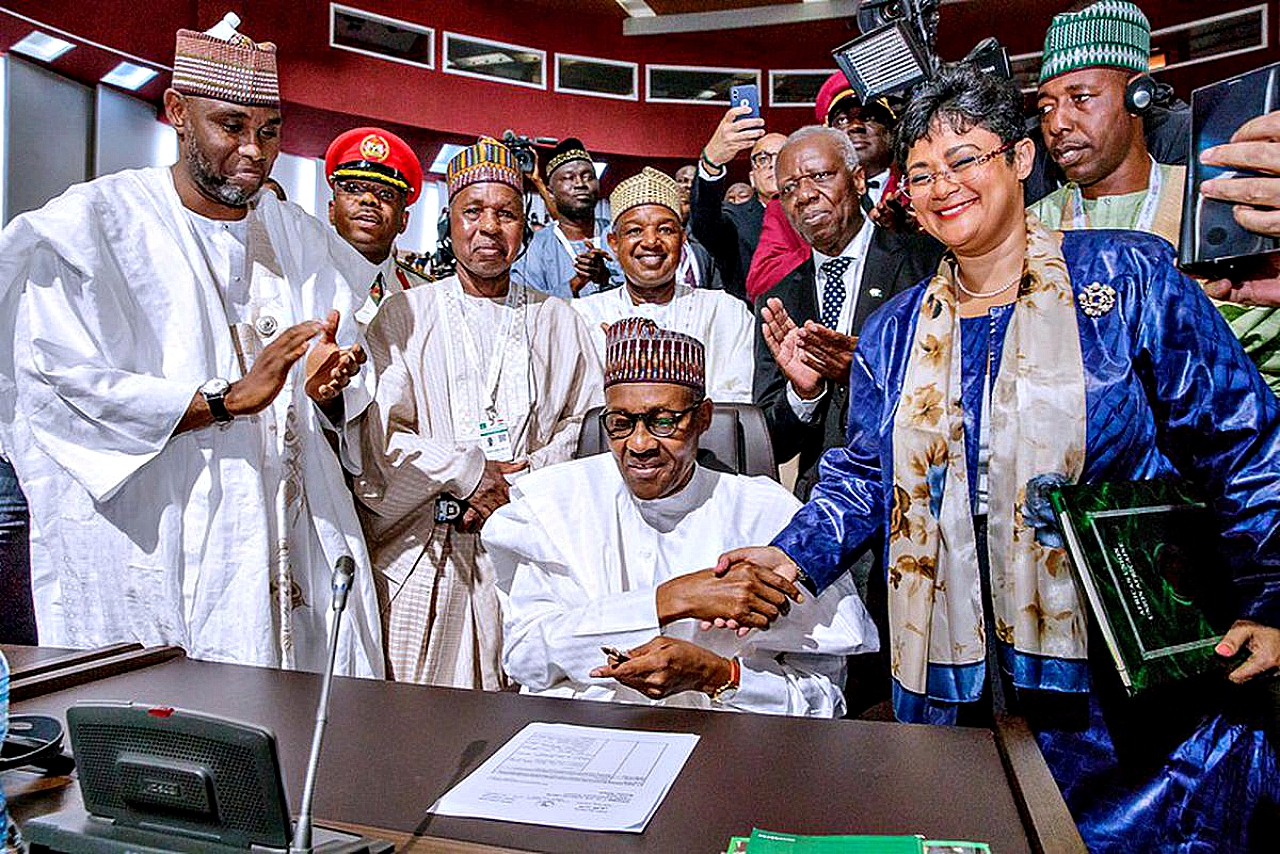
The African Continental Free Trade Area is the largest since the creation of the World Trade Organization in 1994
AFP | African nations officially launched a landmark trade agreement at the African Union (AU) summit in Niger on Sunday, with the long sought-after agreement hailed as a historic step towards “peace and prosperity” across the continent.
After 17 years of tough negotiations, the AU launched the “operational phase” of the African Continental Free Trade Area (AfCFTA) in what AU commission chairman Moussa Faki had described as a “historic” moment.
“An old dream is coming true, the founding fathers must be proud,” said Faki, adding that AfCFTA would create “the greatest trading area in the world”.
It is hoped that AfCFTA – the largest since the creation of the World Trade Organization in 1994 – will help unlock Africa’s long-stymied economic potential by boosting intraregional trade, strengthening supply chains and spreading expertise.
Niger’s President Mahamadou Issoufou hailed it as “the greatest historical event for the African continent since the creation of the Organization of African Unity in 1963,” referring to the AU’s predecessor.
“The eyes of the world are turned towards Africa,” Egyptian President and African Union Chairman Abdel Fattah al-Sisi said at the summit’s opening ceremony.
AU officials announced the launch of the 5 “operational instruments” of the AfCFTA.
Nations agreed to shared “rules of origin, the monitoring and elimination of non-tariff barriers, a unified digital payments system and an African trade observatory dashboard”, the AU commission announced.
The agreement was given a boost when the presidents of Nigeria and Benin signed on at the 2-day summit in Niger’s capital Niamey.
With Nigeria and Benin on board, 54 of the 55 AU member countries have now signed onto the deal, with holdout Eritrea announcing it will consider joining the pact.
Around 4,500 delegates and guests – including 32 heads of state and more than 100 ministers – attended the AU summit in Niamey, which has been revamped and boasts a brand-new airport, upgraded roads, and new hotels for the occasion.
The agreement was formalized at the end of April when the agreement crossed the launch threshold, which required ratification by at least 22 countries.
The zone will be operational from July 1 in 2020, giving countries time to adapt to the agreed changes, Issoufou said.
The International Monetary Fund (IMF) in a May report described the free-trade zone as a potential “economic game changer” of the kind that has boosted growth in Europe and North America, but it added a note of caution.
“Reducing tariffs alone is not sufficient,” it said.
The AfCFTA commits most countries to 90 percent tariff cuts within a 5-year period – reducing barriers to trade on the continent.
Amaka Anku, Africa analyst at Eurasia group, described the deal as a positive step but said implementing the AfCFTA was still “a long way from taking off”, with concerns on how many of the new regulatory agencies for the trade agreement would be funded. The AU estimates that the deal will lead to a 60 percent boost in intra-African trade by 2022.
At the moment, African countries trade only about 16 percent of their goods and services among one another, compared to 65 percent with European countries.
Additional reporting by Reuters