Opinion
AfCFTA: Africa needs inclusive trade agreement
By Jamie Macleod and David Luke
Continental free trade agreement gaining momentum
Addis Ababa,
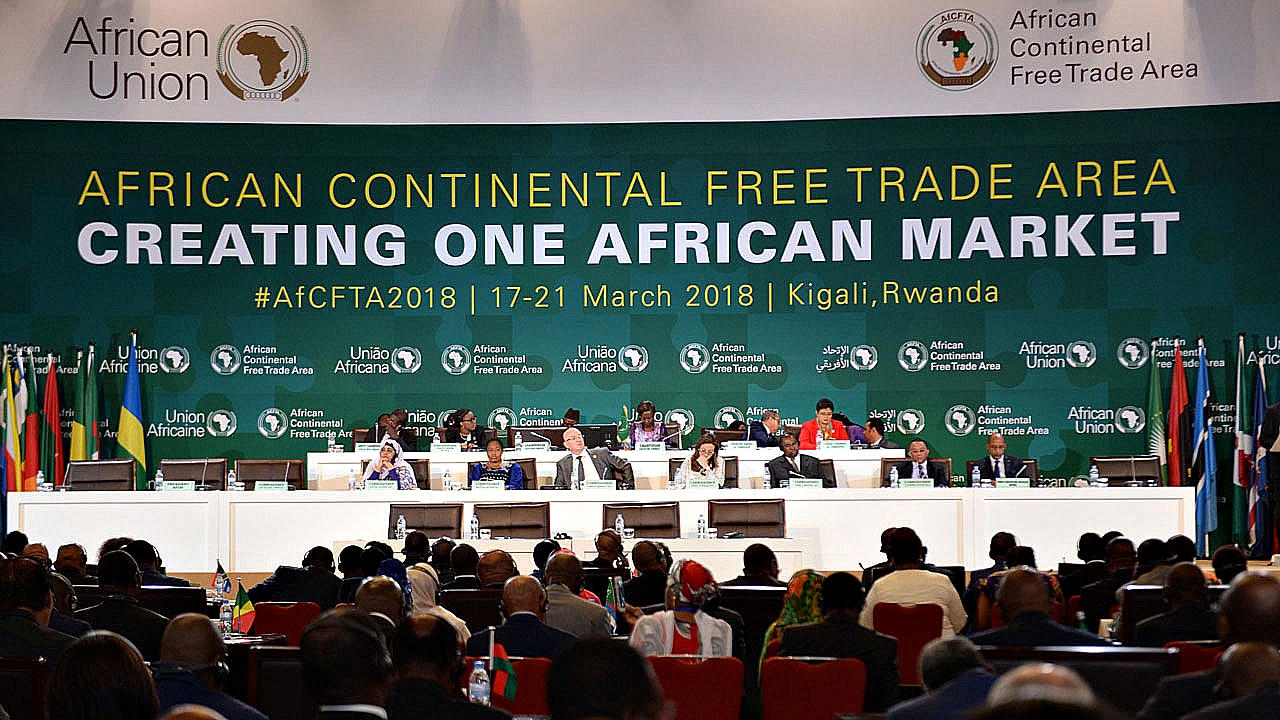
The African continental free trade area (AfCFTA) is among the most momentous of developments in trade. Signed by 52 African states, it is by number of participating countries the largest trade agreement since the formation of the World Trade Organization (WTO). It occurs not just in an international climate of aversion to free trade, notably with stalemate at the WTO and bellicose US trade policy, but also in a climate in which trade agreements just don’t seem possible. Many negotiations have been drawn out and time consuming, often languishing without ever entering into force. These include – but are not limited to – the Regional Comprehensive Economic Partnership, Free Trade Area of the Americas (FTAA), Transatlantic Trade and Investment Partnership, the European Union’s economic partnership agreements, and the tripartite free trade area.
The AfCFTA is different. Despite capacity constraints and the diversity of their countries, African negotiators have worked industriously and effectively. This is an important moment for Africa. The AfCFTA consolidates progressively 55 fragmented African countries into a market of 1.3 billion people with a combined gross domestic product (GDP) of US$2.3 trillion, roughly the size of the India. Research at the United Nations Economic Commission for Africa (UNECA) forecasts it to have the potential to boost intra-African trade by between 50 percent – 100 percent, depending on the extent to which non-tariff barriers are also reduced. It has been driven by firm political commitment. The threshold number of country ratifications required for the agreement was reached within 1 year, a pace of ratifications that is unprecedented in African Union history.
Yet it is not enough for the AfCFTA to be negotiated, concluded and ratified. It must change lives, reduce poverty, and contribute to economic development. It is increasingly recognized in the international trade discourse that trade must become more inclusive. There are a number of measures African policy-makers can take to ensure this, such as adopting simplified trading regimes and addressing the non-tariff barriers that prove most burdensome to small businesses.
In doing so, the policy-makers behind the AfCFTA can learn from integration efforts elsewhere in the world. In the past, the European Union (EU) was the model most usually held up as exemplary. Yet, for Africa, the Association of Southeast Asian Nations (ASEAN) may be more appropriate. Like Africa, it comprises a diverse range of countries, politically, socially and economically, and continues to face challenges with both between- and within-country inequality. As it has integrated, ASEAN, like Africa, has had to consider how to strategically align its partnerships with outside countries and determine how to share equitably the benefits of integration among its members. Many of the technical challenges to integration in ASEAN have African analogies; implementation of regional initiatives can be uneven, services trade liberalization can lag and non-tariff barriers often persist.
As Africa launches the AfCFTA, much can be learned by looking east.
Failure, too, is a famously great teacher. Africa can draw lessons from the failed FTAA initiative, which in trying to consolidate a mega-regional trade agreement over 34 countries at very different levels of development, ended ignominiously without agreement in 2005 after a decade of negotiations. There, it was recognized that the more advanced partners, such as the US, should take leadership roles. Yet, if they are perceived as seeking to concentrate most of the benefits on themselves, they can lose their legitimacy and unravel integration.
Jamie Macleod is a Trade Policy Expert and David Luke is Coordinator of the African Trade Policy Center at the United Nations Economic Commission for Africa. The original version of this article was published at the Official Monetary and Financial Institutions Forum.