Business
Adapting to the New Climate Economy: A Strategic Imperative for Businesses in Africa


By John Kourkoutas
Africa is not a single market. It is a continent of extraordinary diversity – culturally, economically, and climatically.
Yet, too many international businesses still approach Africa as a monolithic region, overlooking a critical determinant of commercial success: climate.
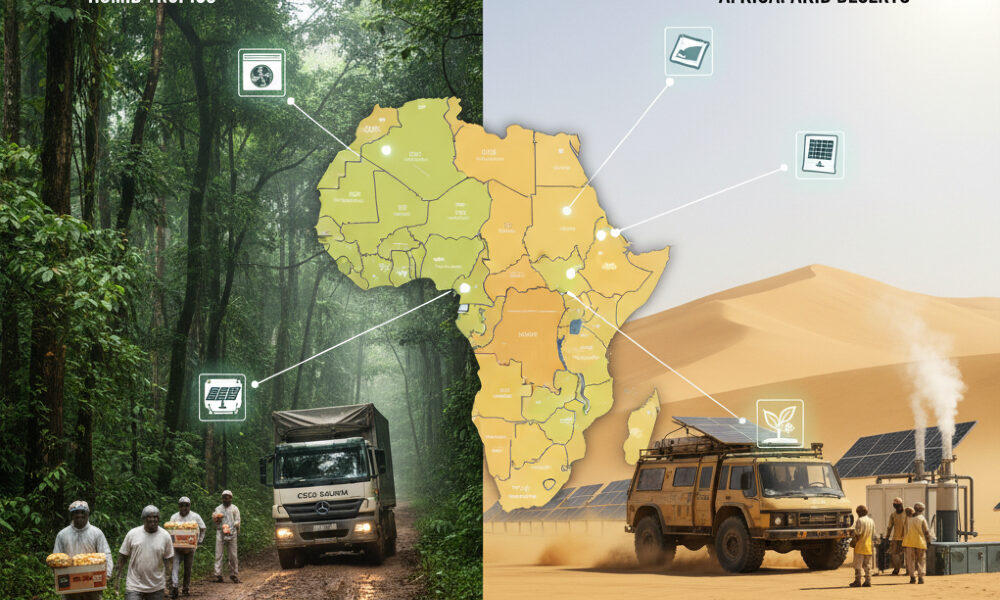
Recent climate data reveals a powerful truth often missed by European and global firms: Africa spans over a dozen distinct climate zones – from the sweltering arid deserts of the Sahara to the humid tropical rainforests of the Congo Basin, and from highland temperate belts to seasonal savannahs. Each of these zones shapes consumer behavior, supply chain logistics, product performance, and market timing in unique ways.
For companies planning or already executing African expansion, understanding this climate-driven complexity isn’t just an advantage – it’s a strategic necessity.
Population Meets Climate: Where Opportunity Concentrates
Africa’s population is not evenly distributed. The most densely populated climate zones – tropical savannah (Aw) and hot semi-arid (BSh) – are home to over 28,000 and 21,000 people per square kilometer respectively in key urban corridors.
These concentrations aren’t just demographic footnotes; they represent high-potential markets with distinct environmental conditions that directly influence demand.
Ignoring climate means marketing the wrong product, at the wrong time, in the wrong place.
Climate Zones Drive Demand: A Regional Breakdown
1. Tropical Climates (Af, Am, Aw):
From Lagos to Kinshasa, high heat and humidity dominate. Demand surges for:
- Energy-efficient cooling systems
- Moisture-resistant packaging
- Food preservation and cold chain technologies
- Mold- and pest-resistant building materials
2. Arid and Semi-Arid Zones (BWh, BSh):
Covering much of North and Horn of Africa, these regions face water scarcity and extreme temperatures. Opportunities include:
- Solar-powered desalination and irrigation
- Drought-tolerant agricultural technologies
- Heat-optimized energy storage and electronics
- Water-saving construction techniques
3. Temperate and Highland Climates (Cwa, Cwb):
Found in parts of Ethiopia, Kenya, and South Africa, these areas experience cooler temperatures and distinct wet/dry seasons. Here, businesses must adapt to:
- Seasonal shifts in consumer spending
- Cold-weather product variants
- Supply chain disruptions during rainy seasons
Lessons from the Field: 100+ African Projects Analyzed
Our team has supported over 100 market entry and expansion projects across sub-Saharan Africa. One consistent insight emerges: climate determines product performance.
- Solar panels in the Sahara (BWh) generate more peak power but degrade faster due to sand abrasion and heat stress – unlike in the humid Congo Basin (Af), where cloud cover reduces output but humidity increases corrosion risk.
- Food processing equipment in coastal West Africa must resist salt and moisture, while inland Sahel models need dust filters and heat tolerance.
- Construction materials in monsoon-prone regions require rapid drying properties, while desert zones demand UV resistance and thermal insulation.
One-size-fits-all product design fails. Climate-smart adaptation wins.
Supply Chain: The Climate Factor Most Companies Overlook
Africa’s logistics networks are deeply vulnerable to weather patterns. Ignoring this can lead to costly delays, spoilage, and reputational damage.
Key climate impacts:
- Rainy seasons disrupt road transport in tropical zones (e.g., West Africa’s April – July cycle).
- Extreme heat degrades pharmaceuticals, electronics, and perishables during transit.
- High humidity compromises packaging integrity, requiring desiccants or vapor barriers.
Smart supply chains don’t just react to climate – they anticipate it.
Timing Is Everything: Aligning Market Entry with Climate Cycles
When you enter a market matters as much as where you enter.
- Agricultural equipment sells best just before planting seasons – which vary by rainfall patterns across zones.
- Construction projects stall during heavy rains in equatorial regions but thrive in dry seasons.
- Consumer spending on cooling appliances spikes before the hot season, not during it.
Aligning product launches, marketing campaigns, and distribution with local climate calendars can boost ROI by up to 40 percent, according to field data from East African retail expansions.
A Smarter Way to Enter African Markets
At MrExportToAfrica, we don’t map your product to a country – we map it to a climate reality. A cooling unit that performs flawlessly in Lagos’ tropical humidity may overheat and fail in Khartoum’s 45°C desert heat.
Both are African cities – but they are worlds apart climatically. Our climate-zoning analytics help global exporters:
- Match product specifications to regional environmental stressors
- Optimize packaging, materials, and warranties
- Time logistics and sales campaigns to seasonal rhythms
- Reduce returns, increase customer satisfaction, and accelerate market penetration
Your Climate-Smart Action Plan
- Identify which African climate zones align with your product’s technical strengths.
- Adapt design, materials, and packaging to dominant regional conditions.
- Time market entry and promotions around favorable weather windows.
- Plan logistics with climate-driven risks in mind—rain, heat, dust, humidity.
Success in Africa isn’t about entering “the African market.” It’s about succeeding in the right climate zone – where your solution delivers maximum value, reliability, and impact.
The Bottom Line
Africa’s climate diversity is not a barrier – it’s a blueprint. Companies that treat climate as a core strategic variable, not an afterthought, will lead the next wave of sustainable, profitable growth on the continent.
So ask yourself: Which climate zones align best with your product’s capabilities – and where can you create the most value?
The future of African market strategy isn’t just geographic. It’s climatic.
John Kourkoutas is business development expert that specializes in helping companies, export teams, and business leaders succeed in Africa’s dynamic and emerging markets.