Owusu on Africa
A Sovereign Sensibility: Why Trump’s Threat to Nigeria Misses the Mark


By Fidel Amakye Owusu
Diplomacy, in its ideal form, is a subtle art of calibrated language and mutual respect. The recent exchange between Abuja and Washington has been anything but.
President Donald Trump’s reported threat of unilateral action against Nigeria, ostensibly over religious violence, was met with a rebuttal that was as firm as it was instructive. The Nigerian government’s response offers a masterclass in navigating the treacherous waters of great-power politics while defending a complex national reality.
Beyond a Religious Binary: The Complex Roots of Conflict
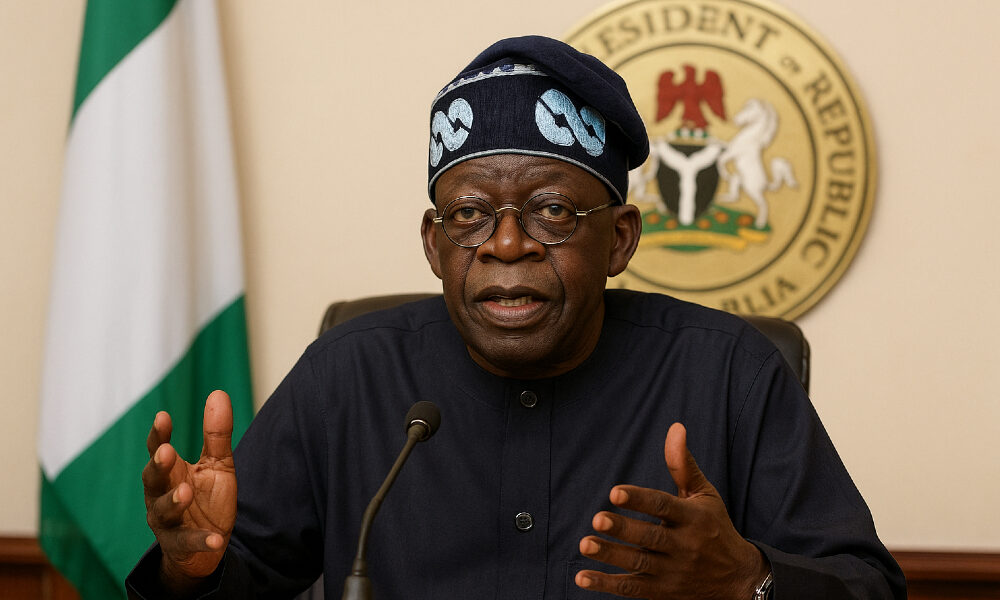
President Bola Tinubu’s administration was quick to reject the characterization of Nigeria as religiously intolerant, pointing to its “consistent and sincere efforts… to safeguard freedom of religion.” This is more than mere diplomatic posturing.
It is a defence of a carefully managed, if fragile, national project. Nigeria’s population is almost evenly split between Muslims and Christians, but this divide defies a simple north-south cartography.
Significant Muslim populations thrive in the south, just as historic Christian communities persist in the north. To reduce the nation’s conflicts to a religious binary is not just an oversimplification; it is an analytical failure with dangerous policy implications.
The recent surge of violence in the country’s Middle Belt, while horrific, is a case in point. The attacks, which have disproportionately affected Christian farming communities, are often portrayed as sectarian crusades.
In reality, they are better understood as a brutal resource war. The core driver is a struggle between predominantly Muslim pastoralists and mostly Christian agrarian communities over scarce land and water.
Climate change and desertification have intensified this competition, weaponizing a longstanding cultural and economic friction. To ignore this context is to misdiagnose the malady, ensuring any prescribed cure will be ineffective.
Nigeria’s rejoinder to President Trump was not a denial of its challenges, but a defence of its sovereignty and a plea for nuance. It is a reminder that in the complex theatre of international relations, the loudest voice is seldom the most insightful.
The Sovereign Imperative in a Fractured Landscape
For Nigerian leaders, this complexity creates a sovereign imperative that foreign politicians can afford to ignore. They must confront a hydra-headed security crisis where these farmer-herder clashes intertwine with rampant banditry and violent extremism.
Any response must be measured to avoid inflaming the very religious tensions they are accused of ignoring. The “freedom” with which an American president can opine is a luxury not afforded to those who must govern the ensuing turmoil.
A Tale of Two Interventions: From Cooperation to Confrontation
This is not the first time an American administration has taken an interest in African security. The precedent, however, highlights the stark contrast in approach.
The Obama administration’s intervention against Joseph Kony’s Lord’s Resistance Army in Uganda was pursued in cooperation with regional governments. It was a supporting role, leveraging U.S. assets to assist a sovereign ally in neutralizing a mutual threat.
The current rhetoric of unilateral action, by contrast, evokes a neo-colonial playbook that is politically toxic and operationally myopic.
The lesson for Washington is clear: cooperation works where threats falter. A credible policy would seek to bolster Nigerian institutions, support conflict-resolution initiatives addressing the root causes of the land crisis, and share intelligence.
A heavy-handed, religiously framed intervention would likely bolster nationalist sentiments, undermine the government it seeks to pressure, and further destabilize a critical region.
Nigeria’s rejoinder to President Trump was not a denial of its challenges, but a defence of its sovereignty and a plea for nuance. It is a reminder that in the complex theatre of international relations, the loudest voice is seldom the most insightful.
The true path to stability lies not in unilateral threats, but in a partnership that respects the intricate and difficult reality on the ground.
Fidel Amakye Owusu is an International Relations and Security Analyst. He is an Associate at the Conflict Research Consortium for Africa and has previously hosted an International Affairs program with the Ghana Broadcasting Corporation (GBC). He is passionate about Diplomacy and realizing Africa’s global potential and how the continent should be viewed as part of the global collective.