Opinion
A Hard Nut to Crack: Africa Can Finally Capture the Global Cashew Value Chain
Why the continent that supplies the raw crop still can’t capture the wealth it creates – and why that may finally be changing.


By Wilbert Chaniwa
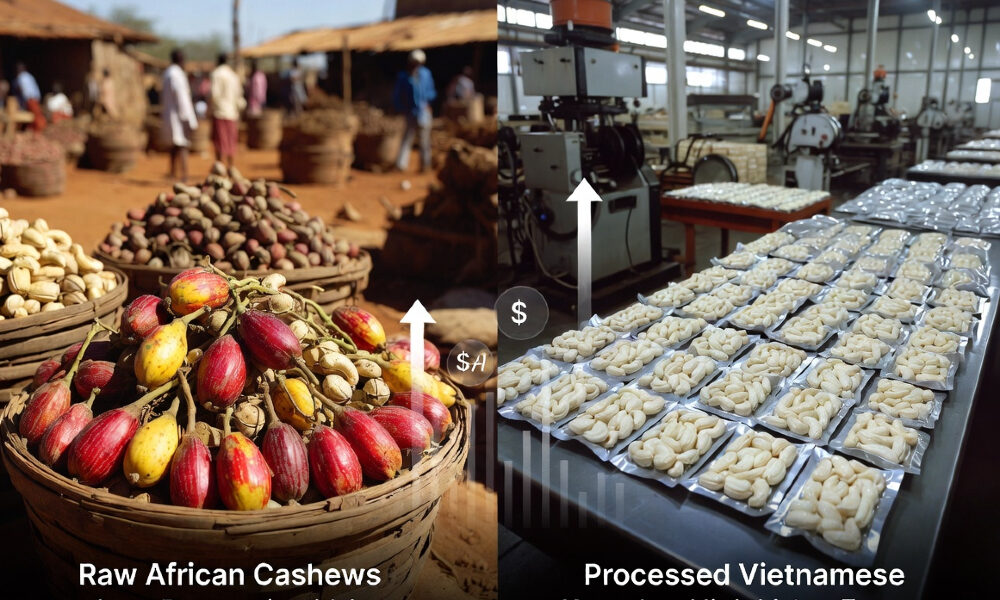
Here is a number that should trouble every African policymaker, investor, and agribusiness leader: Vietnam grows less than 10 percent of the cashews it processes. Africa grows more than 60 percent of the world’s supply. And yet in 2024, Vietnam earned US$4.37 billion exporting processed cashew kernels, marking its 18th consecutive year as the world’s top cashew exporter. Africa, the source of the raw material, earned a fraction of that sum – for shipping out the unprocessed nut.
The gap is not a rounding error. It is the story of an entire industry built on someone else’s harvest.
Who Actually Profits From Africa’s Cashews
In 2023, Vietnamese factories imported more than 3 million tonnes of raw cashews, and 2.2 million tonnes of that volume came directly from Africa. Côte d’Ivoire (Ivory Coast), the world’s largest raw cashew producer, sent 81 percent of its entire national harvest to Vietnam. Ghana, Nigeria, and Burkina Faso supplied most of the rest.
Vietnam paid roughly US$2 billion for that raw African crop. It then processed, packaged, and resold the kernels at an average of US$6,003 per tonne to buyers in the United States, Europe, China, and the Middle East.
The farmer in Ivory Coast who actually grew the nut, meanwhile, was paid somewhere between US$500 and US$700 per tonne at the farm gate.
Do the math and the picture is stark: an 8.5-times value gap separates the African farm from the European retail shelf. Every dollar of value created by processing, branding, and certification is captured in Hanoi and Ho Chi Minh City – not in Abidjan, Accra, or Dar es Salaam, where the crop is actually grown.
Then comes the final irony. Africa imports processed cashew products back from abroad, effectively repurchasing its own commodity at a markup. South Africa’s cashew snack retail market alone reached 1.2 billion rand (US$74 million) in 2023, much of it sourced from Vietnamese and Indian processors selling packaged nuts made from African raw material.
A Vacuum of Africa’s Own Making
This is not simply a case of unfair global trade. It is a structural vacuum that Africa created through decades of underinvestment in processing infrastructure – and one that Vietnam filled through deliberate industrial strategy, sustained capital investment, and export discipline. Vietnam built the mills, trained the workforce, secured the certifications, and cultivated the buyer relationships that Africa largely left on the table.
The result has been a textbook case of value extraction: raw material flows out, finished product flows back in, and the margin sits permanently offshore.
The Window Is Finally Opening
There are, however, real signs the balance is starting to shift.
Ivory Coast has increased its domestic kernel processing capacity nearly fivefold in four years, from 103,000 metric tons in 2020 to 345,000 metric tons in 2024, using export levies, processor subsidies, and dedicated industrial zones to incentivize local manufacturing. Ghana is targeting 85,000 metric tons of processing capacity by 2026. Tanzania is drawing foreign direct investment into new processing plants.
And in April 2025, the United States imposed a 46 percent tariff on Vietnamese cashew kernels – a move that has effectively cracked open a US$1.2 billion American import market for certified African processors to enter, provided they can move quickly enough to fill the gap.
The opportunity is real. But it will not stay open indefinitely.
What Africa Must Do Now
Capturing this moment will require more than isolated national efforts. It calls for coordinated action on several fronts:
- Regional export tax coordination across ECOWAS member states, so no single country undercuts collective bargaining power.
- Dedicated industrial processing zones that lower the cost of capital and infrastructure for new mills.
- Vocational training programs to cut kernel breakage rates, currently near 40 percent in parts of Africa, down to the global benchmark of 25 percent.
- Universal certification standards – Fairtrade, BRC, and organic – as a baseline requirement rather than a premium add-on.
- Diversification beyond raw kernels into cashew butter, cashew milk, and branded consumer snacks, product categories that can generate up to three times the revenue per tonne of the unprocessed nut.
The Nut Is African. The Wealth Should Be Too.
For nearly two decades, Africa has supplied the raw material for a global industry it does not control and barely profits from. The continent that feeds the world’s cashew supply chain has, for too long, been paid only at the very beginning of it.
The tariff shock in Washington and the processing gains in Abidjan suggest the door will not stay open forever – but for now, it is open. The question is whether Africa’s governments, investors, and processors move fast enough to walk through it, or whether they let this moment pass the way so many before it have: watching someone else turn their harvest into someone else’s fortune.
Wilbert Chaniwa is an entrepreneur, corporate consultant, and author specializing in African agribusiness, investment advisory, and agri-food value chains. He is the Founder and CEO of RIC Brands, a UK–Africa agribusiness and hospitality company operating in the United Kingdom and Rwanda. His work focuses on food and soil sovereignty, reducing import dependency, restoring soil health, and scaling domestic food production. He also advances indigenous crop commercialization – such as fonio, moringa, baobab, teff, and bambara groundnut – while promoting knowledge transfer, market access, and agri-CPG trade across Africa.