Opinion
A Golden Precedent: How Mali is Rewriting the Rules of Resource Sovereignty
A bold new mining code is redirecting wealth to local communities – and the rest of the continent is taking notes.


By Gregory September
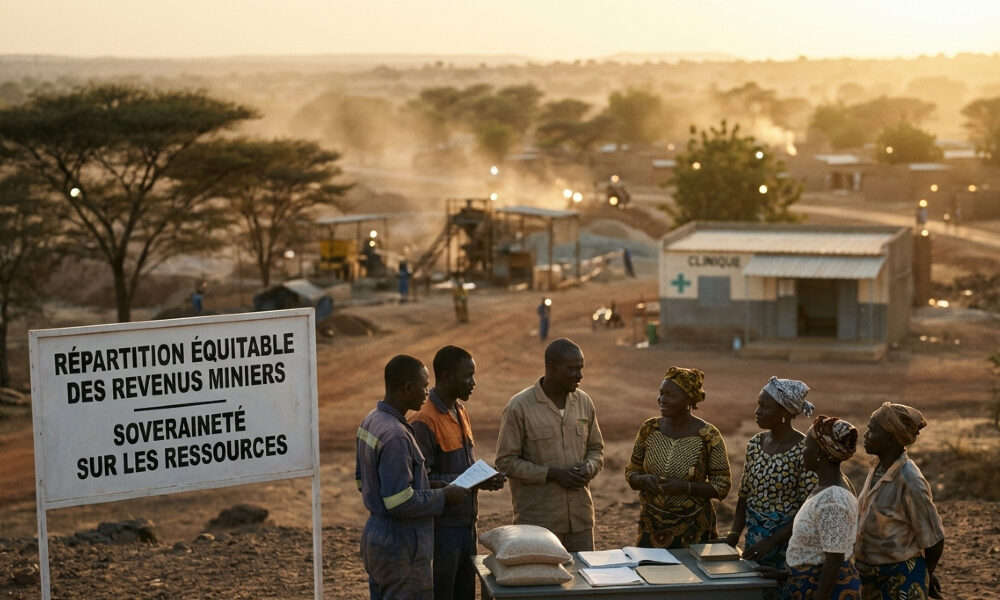
Mali has taken a significant step toward redefining what resource wealth means for the people who live atop it. Under the country’s reformed mining code, US$33 million in gold revenue has been distributed directly to local communities – the towns and villages that sit on some of the richest gold deposits on earth, yet have historically seen little of the prosperity that wealth generates.
This is not a charitable gesture. It is policy. And it matters enormously.
For decades, the standard model of African resource extraction followed a grimly familiar script: multinational corporations secured mining licenses, gold and minerals flowed outward to foreign shareholders and European financial institutions, and local populations were left with scarred landscapes, polluted water, and token employment.
Mali was no exception. As one of Africa’s top gold producers – consistently ranking among the continent’s leading exporters – the country generated billions in mining revenue while a substantial share of its population remained in poverty.
The new mining framework changes that calculus in a meaningful way. Revenue is now channeled toward schools, roads, hospitals, and local infrastructure – public goods that compound in value over time and are built with money that, under the previous arrangement, would have largely exited the country.
Sovereignty as Economic Strategy
What Mali is demonstrating is that resource sovereignty is not merely a political slogan – it is a viable economic strategy. When governments assert meaningful control over the terms under which their natural resources are extracted, the fiscal arithmetic shifts.
Communities gain a genuine stake in the industries operating in their backyards. Local investment creates local multiplier effects. The relationship between a nation and its mineral wealth becomes something other than extraction.
This model is not without precedent. Botswana’s decades-long negotiation of its diamond revenues through Debswana – a joint venture with De Beers structured to favor the state – is frequently cited as a case study in how African governments can leverage natural resources into sustainable development.
Norway’s sovereign wealth fund, built on oil revenues, offers another template. The question has never been whether such models work. It has been whether political conditions permit them.
In Mali’s case, the political context is undeniably complex. The country has been governed by a military junta since 2021, has expelled French forces, withdrawn from the Economic Community of West African States (ECOWAS), and has increasingly aligned itself with Russia.
Western governments and multilateral institutions have responded with sanctions and warnings about instability. Those concerns are legitimate and should not be dismissed.
Separating Governance From Policy
Yet it is possible – and analytically necessary – to evaluate a specific policy on its own merits, independent of the broader political environment in which it operates. The redistribution of mining revenue to local communities is a sound development principle regardless of who implements it.
Critics who conflate opposition to Mali’s military government with opposition to resource sovereignty risk discrediting a genuinely important idea.
The rest of Africa is watching. From Niger to Zimbabwe, from the Democratic Republic of Congo to Zambia, governments are reassessing the terms of mining agreements signed under different political and economic conditions.
The global commodity supercycle, the energy transition’s insatiable demand for critical minerals, and a generation of African leaders less willing to accept inherited arrangements are converging to produce a genuine renegotiation of the continent’s relationship with its own resources.
The Real Question
The US$33 million figure is, in absolute terms, modest. Mali’s total gold exports are worth several billion dollars annually.
The share reaching communities remains a fraction of the total revenue generated. Transparency mechanisms, anti-corruption safeguards, and democratic accountability – all of which are currently limited under military rule – will ultimately determine whether this redistribution delivers lasting value or becomes another form of political patronage.
But the principle embedded in this policy is significant: that the people who live where resources are extracted have a right to a meaningful share of the wealth those resources generate. That principle, applied consistently and accountably, has the potential to alter development trajectories across a continent that holds an estimated 30 percent of the world’s mineral reserves.
The old model enriched shareholders in London, Paris, and Toronto while communities in Kayes and Sikasso waited. One policy cannot undo that history. But US$33 million arriving in local hands – rather than departing in foreign accounts – is a data point worth examining seriously.
The continent is indeed watching. Policymakers, investors, and international institutions would be wise to watch as well.
Gregory September is a South African academic, author, and geopolitical analyst with extensive experience in government and Parliament. He is the founder and CEO of SAUP (Sustainability Awareness and Upliftment Projects NPC), which focuses on sustainability education and community development. He previously served as Head of Research and Development for the Parliament of South Africa. His work centers on sustainability, African geopolitics, and economic development, and he regularly contributes to analysis of global political and economic affairs.