Opinion
“The fear of Buhari” whips Nigeria into shape – and Africa just might be carried along with it
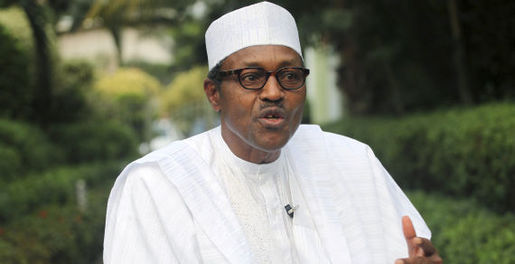
By Dan Aceda
“If Nigeria moves, then Africa moves. If not, then we must wait.”
I do not remember where I first came across the quote above, but as a Kenyan I could never find a good reason to agree with it. That was until I begun to interact closely with Nigeria.
Over the past 2 years I have been a part of the Vecna Cares team that is working on designing and implementing an electronic health records tech tool for low resource settings in several states in Nigeria.
I am just concluding my second trip to Nigeria in 2 years. The first time out, I spent all my time in the capital Abuja and its’ outskirts – the Federal Capital Territory. This second time, I swam in the ‘belly of the monster’, venturing to some of the smaller rural towns of Ondo State, and then wound up my trip in the Lekki area of Lagos.
I have since changed my stance. There is no doubt in my mind that Nigeria moves Africa.
This is a huge country. The number that I was operating on when I first arrived was 140 million people strong. But having spoken to a few people here and seen it for myself, I dare say that we should be pegging that number at about 190 million if not 200 million.
One of the most mind-boggling statistics that I heard is that Nigeria now has 120 million active cell phone users.
I am here shortly after an election that saw a former military dictator win by a landslide.
Think about that for a minute. Where else in the world would such a sentence be written, read out aloud and make sense?
It is said that before President Buhari’s first stint as leader of Nigeria, back in the 1980s, Lagos was a hub for drug trafficking. Upon his assumption of office, he decreed that drug trafficking would, from then on, be a capital offence. He then back-dated the law and declared that all those that were in prison, having been convicted for it, would be executed. Needless to say, the drug trade ground to a halt – or so the story goes.
His was a no-nonsense regime, they say. He did not tolerate graft. He threw people in jail for mere suspicion of graft. When he left, “the weeds soon returned”.
Sheriff back in town
Fast forward to 2015 and the sheriff is back in town.
It is now September 2015 – only months since Buhari took office. The national electricity utility, the Power Holding Company of Nigeria (PHCN), which was never known to supply electricity for more than 2-3 hours a day is now consistently powering the cities for 20+ hours.
The Port Harcourt petroleum refinery that was on the verge of collapse is back at full capacity – and Warri and other refineries are about to come back online. “To the best of my knowledge,” my host says, “there has been no extra funding, technical assistance, or anything new given. This is happening because of the fear of Buhari.”
The fear of Buhari. What a wonderful phrase. Who would have thought that a president who wins a landslide election victory would be termed as being fearsome.
Still, I cannot find anything to disagree with this view. Buhari is yet to complete naming his cabinet – and all these things, improvements are happening. The al-Qaeda-linked Islamist terror group, Boko Haram, which was advancing southwestwards into the country is now said to be just months, maybe weeks, from being snuffed out.
How is it that Nigeria is now winning a war that it was steadily losing for almost 5 years?
As I write this, the sitting Nigerian Senate president, a key member of the Buhari’s party and one of Nigeria’s most powerful men, is currently on trial for false declaration of assets. The trial is being broadcast live all over the country. No matter the outcome of this process, the message is clear – that under the new political dispensation, there will be no sacred cows in the fight against graft and corruption, and that no one is above the law in Nigeria.
Waiting for Buhari
It is thought that some of the best past performing governors – especially those that stepped down owing to the two-term limit rule are hoping to be appointed to Buhari’s cabinet.
Who would have thought that former Nigerian governors would be angling for cabinet positions – using their past performance as credentials, to get to do even more transformative things on the national, federal stage?
“A governor in their state is more powerful than the President of Nigeria in the whole of Nigeria,” declares my host. So why would a person with near absolute authority feel the need to compete at all? It is a sign of an emerging meritocracy, which the cynics had long said was impossible in Nigeria.
Times have changed here. The country has managed over the past few years to create a demand for more accountability, more thinking, more prosperity. It is probably why the former president – Goodluck Jonathan – stood a very slim chance of being re-elected.
His administration had become out of touch and gotten too comfortable. Jonathan was not seen to have taken any decisive action against the marauding Boko Haram until 6 weeks before the election. Voters saw through this, and he was punished at the polls.
Of course not everything is rosy. Many of the new governors who have recently taken office have since discovered that their state coffers were looted by associates of previous gubernatorial administrations. As a result some states have seen industrial action by state workers as they have been unable to pay salaries in time.
There still is blatant and open corruption everywhere, still, there is a lot of fresh air in this country. A renewed expression of critical thinking, innovation and commitment to public service. Of course nobody knows how things will turn out over the course of this presidency but one thing is for sure Nigeria is on the move and the rest of Africa is likely to benefit.
The fear of Buhari. Long may it continue.
Dan Aceda is a Kenyan architect and entrepreneur. He is also a 2013–2014 Global Health Corps fellow and has also been part of the Global Accelerator Conference for entrepreneurs. He has been based in Lagos, Nigeria.