Business
The Bahamas promoting medical tourism: $5 million stem cell clinic approved
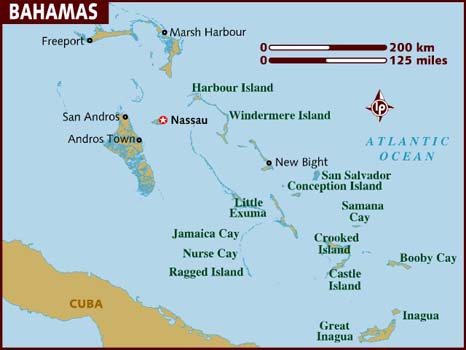

An American investor has received approval from the Bahamas Ministry of Health to develop a cutting-edge clinic on Grand Bahama specializing in stem cell therapy.
Okyanos Heart Institute will spend US$5 million on equipment and construction to bring the island’s first formidable medical tourism product to life.
Geared towards “last chance” cardiac patients, the procedure involves the extraction of stem cells from body fat. While the method has been approved by regulators in the European Union, it has yet to receive a nod from the US Food and Drug Administration.
And it is exactly that pending approval that should make Okyanos enticing to American patients, according to Matt Feshbach, the primary investor.
“This procedure is for patients that have exhausted all other treatments currently available. In Europe, through rigorous trials, they received statistically significant results,” he said.
Feshbach has worked as a fund manager and private investor for the past 30 years and, after EU approval, sought the appropriate venue to market the treatment to the world.
The Bahamas, he said, is the ideal place for the Okyanos Heart Institute, which is scheduled to open by September.
“The Bahamas doesn’t go by EU standards, but they recognize EU approvals,” he added.
Ian Fair, the chairman of the Grand Bahama Port Authority (GBPA), confirmed the clinic’s approval by the Ministry of Health and threw his weight behind the clinic. The matter has now gone to the central government for final business licence approval.
“This would be a very encouraging new business development in the Bahamas, with some good employment opportunities,” Fair said.
The Bahamas is an English-speaking country, it recognizes EU standards, and it’s conveniently located close to the US,” Feshbach said. “We don’t, however, consider ourselves to be in the medical tourism business. We are now offering a cheaper version of US health care. We are offering a new standard for people who have no other option.”
The clinic will spend US$3 million on equipment, and a further US$2 million on construction and other related costs.
The construction phase will employ 40 Bahamas citizens, and after Okyanos is complete, Feshbach said up to 30 people should find full-time jobs as receptionists, medical and administrative staff, and patient coordinators. Okyanos plans to attract high-net-worth individuals, so the idea is to provide top-notch service in a tropical atmosphere.
The clinic will have seven in-patient rooms, although the procedure does not require an overnight stay, according to Feshbach. That said, foreigners coming for this niche care are typically long-term guests in the country, and bring their families.
“The typical traveler books two rooms, not one, and stays for an average of five days,” he told reporters. “That is a huge impact. We are projecting 400 patients in our first year. That equals 4,000 room nights.”
The concept of medical tourism is not a new one. A variety if investors have expressed interest in recent months, and there has been a great deal of interest in bringing this industry to the island.
Medical tourism in the Bahamas is ready to snowball.
“I think if we can show others that this idea works, you’ll see a lot of others follow,” he stated. “By now we’ve had ten inquiries from credible physicians who would like to practice in The Bahamas, from major US universities, to cancer treatment providers. This is an ideal venue.”
Source: Nassau Guardian