Business
The African Woman: An Evolving Enigma
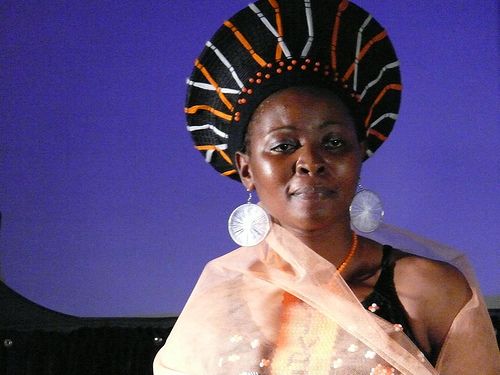
The African woman has always been a mother and a keeper of the house, but she was nothing more other than ‘maker’ of children. Largely stereotyped and overlooked, she was never considered for what she could contribute to an economy. The widely held African belief of women being inferior to men lingered until recently, and the African economy has been better for it.
Gardiol van Niekerk of the University of South Africa once wrote; “the outcomes of historical research are to some extent a reflection of the researcher’s perceptions of historical events”. While many grew up believing that women were not a force in times past, historical records point to the fact that women have always held important roles throughout African civilization, they are, in fact, an integral part of African history. The innate tendency of women to nurture and take care of their own has made them loyal citizens of in various communities, going an extra mile to ensure the sustenance of such communities.
From traditional Queen Mothers like Yaa Asantewa of Ghana to the Queens of Ethiopia and political leaders like former Senegalese Prime Minister, Mame Madior Boye, African women leaders have fought hard to defend the rights of their people and to facilitate development. Yaa Asantewa, the Ghanaian Queen mother of Ejisu could not watch her people suffer in the hands of British colonists. She fought for the protection of her people and their land against the British. Although she was exiled to Seychelles as a result, her people had already been inspired to stand their ground: the Asante army fought for the protection of their land and the Asante kingdom prevailed.
I was also amazed to see in the history books that Kano, Nigeria once had a queen. I doubt you’d believe it too. But, a woman from 1580-1582 ruled Kano. Furthermore, Angola’s Queen Ann Nzingha fought against armed Portuguese forces throughout her life for freedom of her people until she died at the age of 81.
Queen Nefertiti of Egypt also fought in active battle against foreign invaders and was quite influential in her times. Mauritanian freedom fighter Dahia Al-Kahina chased Arab invaders off their land in the battles of 690 AD. She led an army and showed courage in defeat, taking her own life rather than succumb to the enemy.
Mbuya Nehanda of Zimbabwe, Empress Delete Rufael of Ethiopia (1724), and Queen Mother Ndlorukazi Nandi of the Zulu Kingdom of South Africa (1815-1827) are other examples of women who have led their people with courage and pride. Sadly, their heroics seem to be fading off despite its pertinence in African history. The story of the African woman is similar to the hard working employee who never gets enough appreciation.
Women rights activists did their best in ensuring women enshrine gender equity within African societies, but activism was never as effective as results in Africa. When women stood up to show what they are capable of: excelling in academics, business, politics and other areas of life, their excellence started washing off the stereotype. Now, Africa is warming up to gender equity and tapping from this overflowing resource.
When Women Lead
Ellen Johnson-Sirleaf became the 24th president of Liberia in 2006, becoming the first elected female head of state in Africa. When a fire broke out at the Executive Mansion of Liberia on July 26, 2006, seriously damaging the structure, instead of renovating, the president called funding for the repairs a low priority in the face of more pressing needs; that is the heart of a woman. She transferred her office to the nearby Foreign Ministry building and even chose to live in her personal home. Although Liberia still ranks close to the bottom of Human Development Index (HDI) at 174th position, Johnson-Sirleaf’s effort at improving the company’s economy is yielding results. Poverty rate reduced from 64 percent to 56 percent between 2007 and 2010, according to africaneconomicoutlook.org.
Ngozi Okonjo-Iweala, arguably the best thing to happen to Nigeria’s economy, has led an unstable economy to one predicted to record 7.3 percent GDP growth for 2014, according the International Monetary Fund (IMF). Although some economic experts might argue to the contrary, records prove that the country has experienced unprecedented economic stability; Nigeria couldn’t have gotten a better Minister of Finance.
Joyce Banda has been president of Malawi since 2012. She restored severed diplomatic ties with the international community; her predecessor, Bingu wa Mutharika had accused them of interfering in his government with plans to topple it. In order to reduce government spending, Banda sold her jet for $15 million. She also sold a fleet of 60 luxury cars held by her predecessor.
The Facts
Women account for about 50 percent of the world’s total population. Unfortunately, two-third’s of the women population is illiterate. In addition, the world percentage of women in parliament is currently 16.6%. In Africa, a greater percentage of the total population consists of women and female children.
According to the World Bank, women account for 50.1 percent of the sub-Saharan Africa’s population (2011 estimate), but female literacy is still low. The United Nations Educational, Scientific and Cultural Organization (UNESCO) records that 38 percent of African adults are illiterates two-thirds of which are women. This statistics shows what Africa is missing out. If the ‘few’ literate women can contribute this much to Africa’s economy, how much more would women contribute with higher literacy levels?
Although, stigma and discrimination against African women still exists in some spheres of society, Africa has come along way from past practices. Women have proved us wrong. They are more than just baby-making machines and home keepers. More so, if a woman can successfully manage the economy of a household, why can’t she manage an economy?
As writer Patricia McFadden puts it; “African women have been an important and increasingly visible part of modern African political life. We participated in anti-colonial struggles as trade unionists, political leaders, wives and mothers, often in the more traditional ways that women have entered politics. But we have also made fundamental changes to the body politic of Africa in very significant ways.” So today, we celebrate the entrepreneur, the investment manager, the economic adviser, the African woman.
Copyright Ventures Africa 2014