Business
St. Lucia to avoid turning to IMF – seeks to find internal solutions
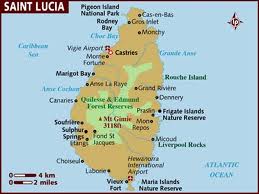
The government of St. Lucia has indicated that while it is anxious to bring closure to the wage and salary negotiations involving public servants, it will not endorse salaries that would further affect the economic situation and force the island into “the clutches” of the International Monetary Fund (IMF).
In a nationwide radio and television broadcast on Sunday night, Prime Minister Dr Kenny Anthony, who is also the finance minister, said the crux of the issue that faces the government is the ability to meet the demands of its 9,500 workers for increases in wages by 15 percent, staggered over three years.
Public-sector trade unions have rejected an offer of a zero percent increase and a one-time payment of EC$1,000 (US$370) and have called on the intervention of the prime minister to reach an amicable solution.
Prime Minister Anthony said the current proposal by the trade unions would increase the government’s wage bill by an estimated EC$55 million (US$20.3 million) per year, while the back pay associated with this proposal would cost about EC$40 million (US$15 million), and in turn lead to the worsening of the current deficit which stands to about to EC$100 million (US$37 million) this financial year.
He said, “It also means that for every ensuing year, the government of St. Lucia would have to borrow an extra EC$55 million (US$20.3 million) just to meet the increase. This is clearly a path that a responsible government should not take.”
Dr. Anthony said, “We still have the chance to avoid going to the IMF, but this will involve some very tough decisions. It will involve re-balancing our expenditure and taking steps to ensure that we borrow only for high-return capital projects.”
Anthony said St. Lucia cannot be oblivious to the fate that has befallen “once mighty democracies” in Europe, North America as well as countries right here in the region. “Save for our pleas to our Maker and Creator, we have nowhere to turn for help to deal with our problems, especially when they are of our own making. We cannot turn to the rest of the world for help. They have all abandoned us, consumed with their own challenges and what they believe to be their strategic interests,” Anthony said.
The mounting fiscal pressures in St. Lucia are as a consequence of low growth and attempts by successive governments to actively spur employment and protect the vulnerable. The country has had to borrow heavily to support these activities.
“St Lucia’s borrowing requirement as a percentage of gross domestic product (GDP) is the highest in the Eastern Caribbean Currency Union. This was the case in 2010, 2011 and in 2012. If this trend is not reversed very soon, we will be firmly on the path to an IMF program,” he said. – (CMC)