News
South Africa resolves to withdraw from International Criminal Court
South Africa’s ruling party has resolved to withdraw from the International Criminal Court (ICC), a deputy minister said on Sunday, as the Jacob Zuma administration faces criticism for ignoring a court order to arrest Sudan’s president earlier this year.
The move will inflict further damage on the beleaguered court after a wave of verbal attacks from other African governments.
The decision, announced on Sunday at a midterm conference of the ruling African National Congress (ANC), will fuel the growing momentum of an African push to abandon The Hague and set up a regional court.
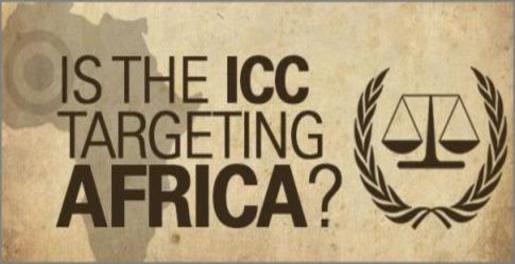
South Africa and other African governments have accused the ICC of showing anti-African and pro-Western bias. They complain that the court has only prosecuted Africans so far, while the United States and European nations seem exempt from prosecution.
The United States, Russia and China are not members of the international court, but they belong to the United Nations Security Council, which can tell the ICC to investigate cases. African leaders have called this unfair and hypocritical.
“There are powerful nations who are also refusing to be part of the ICC and they’ve got these unfettered powers to then refer matters to the ICC,” said Bapela, as he announced that the ANC’s national general council had approved the withdrawal plan.
“The ICC has lost its direction, unfortunately, and is no longer pursuing that principle of an instrument that is fair for everybody,” added Bapela.
He said the plan to withdraw from the court will now be “fast-tracked” for approval by the South African Parliament, where the ANC controls more than 60 percent of seats.
The plan will also be submitted to the ICC’s assembly of states next month and to the African Union’s next summit in January.
South Africa’s decision is a heavy blow to the ICC because the country was an early and strong champion. It was the first African country to join the ICC and it even adopted the court’s treaty as part of its domestic laws. Even when Kenya and other African countries were harshly criticizing the court and demanding an African withdrawal, South Africa still hesitated. The tide turned in June, when South Africa invited Sudanese President Omar al-Bashir to attend an African Union summit in Johannesburg, despite his ICC arrest warrant.
Under the court’s international treaty, South Africa was obliged to arrest al-Bashir, and the ICC ordered it to do so. A South African court issued a similar order. Yet instead South Africa allowed him to enter and leave freely.
Since then, the showdown has grown worse. Last month, the ICC ordered South Africa to explain why it had defied the court’s orders. But at the expiry of the court’s 30-day deadline for providing this explanation, South Africa demanded more time – and accused the ICC of violating its own treaty by issuing orders to South Africa without allowing time for a legal challenge.
President al-Bashir, meanwhile, seems to be gaining more African support all the time. He has been invited to attend a major Africa-India summit in New Delhi later this month and an Africa-China summit in Johannesburg in December.
Source: Agencies