News
South Africa: Jacob Zuma and the ANC face tough test in the coming elections
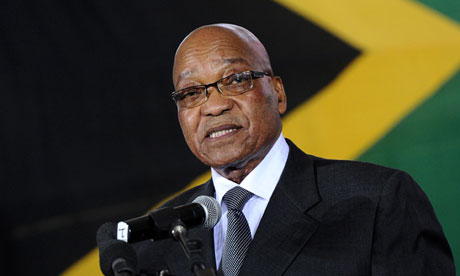
South African President Jacob Zuma. PHOTO/File
Twenty years after the euphoria of South Africa’s first democratic elections swept liberation hero Nelson Mandela to power, the governing party – the African National Congress (ANC) faces its toughest test at the polls next month.
Increasing corruption and a failure to completely erase apartheid’s enduring legacy of abject poverty have sown social and political discontent in the country.
Rocked by scandal and bereft of the iconic Mandela after his death in December, the ANC is still expected to win the elections easily but could see its majority trimmed.
A group of formerly stalwart ANC supporters led by high-profile former intelligence minister Ronnie Kasrils last week urged voters to signal their disappointment by voting for one of several small opposition parties or spoiling their ballots.
At the heart of that campaign is outrage over the spending of some ZAR260 million (US$24 million) of taxpayers’ money on “security upgrades” for President Jacob Zuma’s rural homestead at a time when millions of South Africans remain desperately poor. Kasrils, who describes the campaign as “tough love” for his old party, called the spending “obscene”.
But the latest opinion poll, conducted at the weekend, suggests the scandal has had little effect on ordinary ANC voters. It predicts the party will actually increase its tally from 64.9 percent of the vote in the last elections in 2009 to 65.5 percent, although that runs counter to forecasts by many analysts who see the ANC losing at least a few percentage points.
The ANC’s continued popularity reflects the fact that life feels incomparably better for many South Africans than it did under the white minority’s brutal racist apartheid system.
The administration says it has built 3.7 million houses since the advent of democracy 20 years ago, giving millions of people their first modern homes, while some 15 million people receive government social grants.
Yet economic inequality persists – a recent survey showed 46 percent of the population of 50 million living in poverty while unemployment stands at around 25 percent, according to official statistics.
Racial divisions have proved hard to overcome. White South Africans – around 10 percent of the population, remain in the driving seat of the economy, often dominating the high-end job market.
A study released in 2012 showed that black South Africans hold 21 percent of shares in the top 100 companies listed on the Johannesburg Stock Exchange, Africa’s biggest bourse.
According to Ashwin Desai, a sociologist at the University of Johannesburg says democracy has failed South Africans because the majority are still “mired in poverty in the face of burgeoning wealth on the other side”.
“Democracy should mean more than freedom, it needs to translate to the improvement of lives,” he said.
However, a new black middle class has emerged and people are free to express themselves.
Land ownership is also still largely in white hands. The latest official statistics show that 4.4 million hectares of land have been redistributed since 1994 – roughly 5 percent of “white-owned” land.
Political economist Kwandile Kondlo believes that the gains registered in the past 20 years ring hollow without the land issue being addressed. “Black people are beginning to feel that they have been hard done by as far as land ownership is concerned,” he said. “We can’t honestly claim success if we have not made progress in that area.”
The emotive subject is a central plank of the new Economic Freedom Fighters (EFF) party led by Julius Malema. He promises expropriation of land from whites without compensation and the nationalization of the mines and banks.
The main opposition party, the Democratic Alliance, a successor to a series of reincarnated white liberal parties has growing black leadership and support and is expected to boost its share of the vote from 16.6 percent in 2009 to 23.1 percent, according to the poll.
Source: AFP