Business
Renewables: The sparks of a clean energy revolution
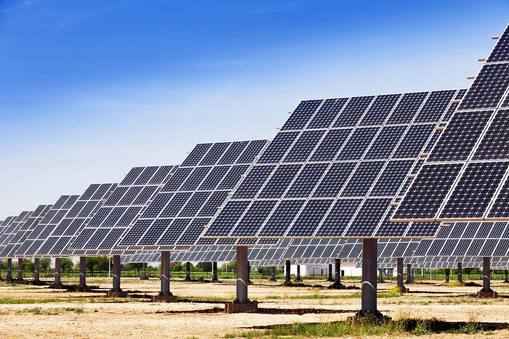
Despite Africa’s rich oil and gas reserves, environmental concerns and the high cost of the infrastructure needed to extract and refine hydrocarbons are driving a push towards renewable energy, particularly solar power. With the continent’s population estimated to double by 2050, analysts expect that electricity demand will treble in Southern Africa and quadruple in East Africa in the next 25 years.
However, meeting this demand will require costly upgrades to infrastructure. “The biggest challenge facing renewable energy projects in Africa is access to finance,” says African Renewable Energy Alliance secretary general Ansgar Kiene. “It is a huge problem, partly because the financial institutions that are offering loans do so only at prohibitively high interest rates. It’s easier for international developers to move ahead with some renewable energy projects [than for local firms] because they can more easily tap into international funding.”
The new $100m investment fund launched in February by the Togo-based African Biofuel and Renewable Energy Company is seeking to channel African investment into green power projects. In addition to setting up the African Renewable Energy Fund, which chief executive Thierno Bocar Tall hopes will hit €200 million ($270 million) before the end of the year, the organisation also provides technical and logistical support to groups seeking to develop clean energy projects.
The company has already completed the roll-out of 10,000 solar-powered streetlights across 11 towns and villages in Sierra Leone, plus a smaller-scale project in Togo and the installation of photo- voltaic cells to bring electricity to 26 villages in Burundi.
Solar street lights
It has also helped to complete landfill and compost projects in Ghana and Cameroon. It has a host of new projects in Côte d’Ivoire, Mali, Burkina Faso and Niger scheduled for 2014. The following year will see the start of work on a $600 million plan to erect 10,000 solar-powered street lights in Chad and launch a 40MW wind farm outside N’Djamena.
“Renewable energy represents a huge opportunity for Africa,” says Tall. “Africa has all the ingredients to allow renewable energy to become a crucial part of our energy portfolio.” According to projections by the International Renewable Energy Agency, if sufficient investment is found the proportion of electricity provided by renewables across Africa could rise from its 2009 level of 17% to 50% by 2030 and 75% in 2050.
Under this ambitious plan, renewables, which contributed around 28GW in 2010, would increase to 800 GW by 2050, with solar energy comprising some 245GW and wind power 242GW. Although this level may prove unattainable in that time frame, a host of new renewable energy deals testify to the support for green technology.
In January, a consortium of companies in Ethiopia signed a contract to construct a biomass energy facility in Addis Ababa, while further plants in Djibouti, Senegal, Uganda and Kenya are already under discussion. Meanwhile, a new study by the Middle East Economic Digest estimates that the Middle East and North Africa could receive more than $50 billion of investment in solar power by 2020.
The report says that a host of solar, wind and hydroelectric projects are set to be commissioned within the next six years that would generate an extra 37,000 MW of electricity. North African countries in particular are planning a push into solar projects with Egypt’s solar projects expected to generate around 1,800 MW, while Algeria is hoping to generate some 3,000 MW through photovoltaic cells.
Morocco, meanwhile, announced in 2009 a range of wind farms and solar plants in the Western Sahara to generate 4GW of energy by 2020, although these have run into legal problems due to a dispute over ownership of the sites where the facilities are to be built.
Rift valley plant
The Kenyan government is also investing heavily in geothermal plants and is already installing turbines for a 350 MW plant in the Rift Valley, with plans for a 400 MW plant and 800 MW facility in the Menengai Crater. This is part of the country’s plan to generate 26% of its energy from geothermal sources by 2030. If achieved, this would make clean energy the largest source of energy in Kenya.
According to estimates from the World Bank, geothermal electricity production from east Africa’s Rift Valley could provide power to 150 million homes. Meanwhile, Ormat Technologies announced at the beginning of February that its Number 3 plant, part of the Olkaria III geothermal complex in Naivasha, Kenya, had now launched commercial operations.
This comes three months ahead of schedule and means that the complex has boosted its energy generation capacity by 110 MW. If local investors and banks are to profit from this push into green energy, they must be persuaded that such projects can bring good returns, explains Kiene.
“Part of the issue here is to make people understand that investing in renewables in Africa is not like giving to charity,” he added. “There are chief financial officers who are choosing to invest. There is a huge under-provision of electricity among African citizens. People have the money and are prepared to pay for good and reliable electricity services, but still they cannot get them. This is a huge untapped market and that means there is real potential here too.”
Copyright The Africa Report 2014