Editorial
Part III: Why Africa Does Not Develop
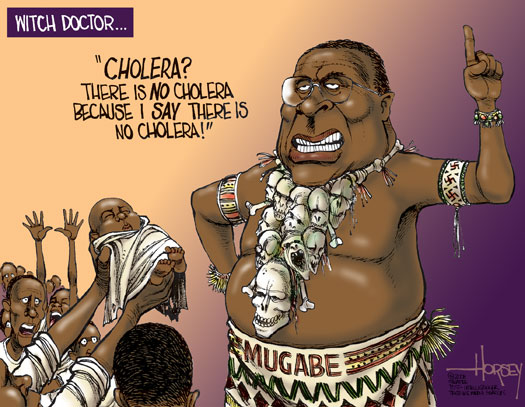

There’s a Ghanaian proverb that says: ‘You do not become a chief simply by sitting on a big stool.’ Interpretively, one does not get to be president without having ambition, drive, support, secrets, compromises and everything else that comes with holding political office. A great many African leaders get into power through both de jure and de facto ways. However, like the Economist says, although sad tales like the March Madness in Mali dominate the news from Africa, the truth is that the continent’s political norms have evolved more towards politicians in suits than mutineers in battle fatigues. Unfortunately, these politicians in suits bring their own brand of African grief – and this was at the core of the new book ‘Why Nations Fail’ by Messrs Daron Acemoglu and James Robinson.
Like the New York Times notes about the book, nations thrive when they develop inclusive political and economic institutions, and fail when these very institutions become extractive and concentrate power and opportunity in the hands of only a few. Yes. This is not an instance of not having institutions or finding donors to establish these things at every level. No. Every African country has institutions and has, in fact, had them for eons. The tribal chiefdoms and kingdoms were and are institutions. Many, like the Buganda Kingdom in Uganda thrived because they bore the perfect blend of inclusion and exclusion. Today, like The Economist article cited above mentions, there are democratic institutions everywhere in Africa, for instance. In fact, only one country, Eritrea, amongst more than 50 countries does not hold elections. Therefore, like the NYT seminally extracts, the heart of the matter beats around this: You can’t get your economics right if you don’t get your politics right.
Under the circumstances, it might be easy to argue that a country like China has been able to garner the temerity to build a world class economy while riding on the back of an autocratic political system; and that African countries could learn and benefit from China’s brand of growth and prosperity. However, this paper disagrees. China is, probably, teetering towards an uncertain future simply because people cannot be fettered, deprived, cowed or coaxed into cooperation. Fareed Zakaria has much to say about what people really want and what they are able to live with. Singapore’s ‘benevolent dictator‘ as an example, did not involve the balance between the dangerous and unsustainable balance of extraction versus inclusion as played by China. Like the Guardian notes, African elites who are now looking to China for a model in modern development and economic prosperity are being completely misled because The Middle Kingdom is, first and foremost ‘… yet another instance of a society rushing into a cul-de-sac …’ It is, definitely, not on course for the level of prosperity found in the Western world. Again, the politics has to be fixed before the economics can be successful.
Call America what you may – but The Great Satan has managed to create as many institutions it possibly can. These, in the main vein of Why Nations Fail are what ensure the survival of the world’s richest and most powerful nation. There are institutions everywhere in America. The lobbyists littered all over Washington, DC consider their offices and causes worth fighting for. The women who believe abortion is their right create institutions worth dying for. The families against the public education system home school their children and create bodies to fight for their rights. Even the men who have sexual relations with boys [North American Man Boy Lovers Association – NAMBLA] have an institution they fund and protect. Under the circumstances, although the last example is, perhaps an example of institutions gone wild, there is precedence and protection under the U.S. constitution.
Africa does not develop because the ‘new men in suits’ would rather extract what they can out of the institutions that are currently in place. The new men do not know balance and neither do they even have the heart to be as bloody minded as the Chinese are and Singaporeans have been in the past. Instead, African institutions take on a very Russian tsar like quality: They become the personal serfdom of the one who has power over them. Like the Russians did before the October Revolution and then under Stalin, the Politburo and now, Mr. Putin, African leaders basically sit on the stool and keep the institutions right under that stool. Other men and women are not allowed to do their duties for their countries and will of the man on the stool is fused with the will of the people. But like history shows, the former USSR collapsed into the Commonwealth of Independent States simply because that kind of governance is unsustainable. People do not necessarily consider the culture of Russia before its tryst with Marxism: but being communist did not fix the politics and the politics ruined what could have been a remarkable economic model. The unfixed politics and unrepentant culture is now what is a hollow Russia. In spite of its awesome ability to generate oil and natural gas like no other place in the world, Russia’s political soul is completely inebriated. And in this state, the people are lulled into doing what the big man demands. This ‘Big Man Syndrome,’ of Africa is the vicious circle that affects Africa the most. It just gets worse and does more damage than all the other vicious circles combined.
Fortuitously, this path to certain doom can be broken. A country just needs a slight opportunity and a series of fortunate events to move on to the next level: These things came in to save the Senegalese day only recently. Their Big Chief, Wade, wanted to abrogate his own constitution by holding on to power for life. But he, due to circumstances beyond his control, let go of power. Senegal will never be the same again. Jerry Rawlings of Ghana also let go. Before these two men, Daniel Arap Moi of Kenya also let go. And once a strong man or former big man lets the reins of power go, there is the opportunity and hope and a chance for peaceful handover of power to the next guy. Look at Ghana. Look at Zambia: After Kenneth Kaunda, another one became leader. And then another and then another – and now, the country even has a white vice president to mock its xenophobic neighbor, Zimbabwe.
Sadly, like The Economist notes, there is a big chink in this argument’s armor. There are simply too many poor and even more illiterate people in Africa. In their state, a big man’s handout is invaluable. This ‘golden’ handshake is the quintessential midas touch and ensures that some people are able to eat while others do not. This ‘divide and conquer’ aspect of African leadership has managed to seep right down to the core of the African culture. Africans have learned to defer to the Big Man. He takes over the institutions and distributes the wealth amongst his own as he sees fit and does this till the sun goes down on his rule. Before that day comes, the Big Man surrounds himself with loyalists and these manage the state of affairs. They control the police, the policy, the people, the pleasure and the pain. The balance between extraction and inclusion is long forgotten, and in its place is a blind autocracy – the kind observed in chimpanzee successions or hostile takeovers by alpha males in lion prides. Prof. Arnold Ludwig speaks to this in his ‘King of the Mountain.’ The blind autocracy does not see the number of people that bury their children because they cannot eat, get adequate health care or drink from infested water sources. This same disability guarantees that voters will continue to be intimidated, elections rigged and that the electoral violence will continue even though electoral commissions are well funded. Thus, although African economies will continue to be inverted and be concentrated in the capital cities, the center will not hold and things will fall apart eventually. Things are not being done and most are compromised – compromised into shape so that the big man can sit on the stool. The Big Man soils the very land on which he sit and this, sadly, is why African nations fail and the continent, as a whole, does not develop.
Dennis Matanda,
Editor – editor@thehabarinetwork.com