Business
No major surprises in budget presentation
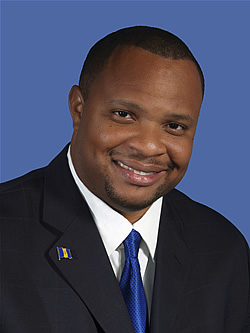
Barbados Minister of Finance Christopher Sinckler (pictured), delivered no major surprises in his second budget presentation, coming only nine months since the first in November, 2010. The budget was presented against a backdrop of a recent downgrade of Barbados’ credit rating by Moody’s, gross domestic product (GDP) growth of 2.1 per cent (as reported by the Central Bank) and high debt and deficit levels.
The assessment of the Institute of Chartered Accountants of Barbados (ICAB) is that the budget featured no new taxes and included some measures to stimulate the productive sectors, but appeared to defer major measures to tackle the fiscal deficit.
It is ICAB’s view that there was no scope for increased taxation in this Budget, given the increases in Value Added Tax (VAT), licence fees, excise taxes and income taxes imposed in the last two budgets.
We therefore agree with the decision of the Minister of Finance to offset the impact of the increase in land tax valuations by adjusting the bands in such a manner as would maintain the same quantum of land tax collected previously. Failure to make this adjustment would have resulted in a major increase in taxation on already heavily burdened taxpayers.
The minister stated in the budget that there is an urgent need to reduce the fiscal deficit. ICAB fully supports this position. The strategy outlined in the budget to achieve the revised fiscal deficit of $461.9 million or 5.2 per cent of GDP includes containing personal emoluments costs, reducing spending on goods and services, better project management and cuts and caps on transfers to statutory boards.
The statutory boards will borrow US$55 million from the National Insurance Board to finance their programmes. ICAB is of the view that this does not constitute expenditure cutting but rather expenditure shifting. Additionally, the use of borrowing from the National Insurance Board to finance Government expenditure will lead to an increase in debt. The minister announced that this programme will be for next year but no indication was given of what will happen in the following year.
With respect to revenue measures, the Minister announced several measures to improve the administration of the tax system and to ensure that all taxpayers make their fair contribution. The extension of the amnesty programme provides an opportunity for taxpayers to regularize their tax status without penalties or interest.
The proposed waiver of interest and penalties on payment in cash of 80 percent of outstanding balance is a good move, although the precise details will need to be clarified. This should help government collect more of the arrears of income tax, VAT and National Insurance contributions and should also encourage more unregistered individuals and businesses to register and bring their affairs up to date.
The interest and penalties are often a significant deterrent to those who have fallen far behind in their obligations. It is hoped that the increased penalty for late filing of tax returns will be effective as it is clearly preferable to burdening the court system with large numbers of delinquent taxpayers.
The reinstatement of the tax free status of the 25 per cent lump sum payment to persons on reaching retirement age is welcomed. However, with respect to fees payable under the Profession, Trade and Business Act Cap 373, while ICAB notes the adjustment made in respect of paramedics, medical technicians and medical dispatchers, we are disappointed that the minister did not take the opportunity to reduce the fees levied on Accountants and other professionals.
The Minister of Finance is to be lauded for the measures to stimulate new sectors of the economy, particularly alternative energy, motor sports, and entertainment. These sectors present opportunities for growth and development of the Barbados economy. Additionally, they provide scope for investment by new entrepreneurs and employment for skilled and talented Barbadians.
The worldwide recognition and success of Sir Garfield Sobers and Rihanna in sports and entertainment demonstrates that Barbados is world class and competitive in these areas in which our small size does not serve as a constraint to growth.
With respect to alternative energy, it is hoped that these measures will make a significant contribution to the reduction of Barbados’ dependence on petroleum products. The importation of more than 9 000 barrels of oil per day, which represents 90 percent of total needs at a cost of US$234 million in 2009, is unsustainable.
The fact that the main users of petroleum products are electricity (50 percent) and transport (33 percent) suggests that measures aimed at the use of alternative energy for these purposes can be particularly impactful.
ICAB supports the use of tax incentives to encourage individuals and businesses to generate energy from alternative sources. However more could have been done to provide incentives to stimulate businesses that will develop, manufacture, install and service renewable energy systems.
The energy grant to be administered through the Welfare Department is a laudable initiative but will have to be closely monitored to ensure that the scheme is properly managed and that assistance is promptly provided only to those in greatest need. In addition, in explaining the concerns about the large drain on foreign currency due to fuels imports, the Minister of Finance might have taken the opportunity to give further details of the pricing mechanism being used by the Barbados National Oil Company Limited (BNOCL) and explain any relationship to the world market price of oil.
ICAB welcomes the commitment of the Government to have a “laser-like focus” on the international business sector in the coming months. This sector has made a substantial contribution to the development of Barbados and has the potential to generate considerable growth in the future.
The International Securities Market, Foundation Legislation, and amendments to existing legislation should serve to make the sector more attractive to new investors. We strongly recommend that the Government moves to address the business facilitation issues raised by the sector.
The international competition in this sector has become more intense and new pressure is being applied by international organizations such as the Organization for Economic Co-operation and Development (OECD).
It is ICAB’s view that it is essential for Barbados to make itself the most business friendly environment and the easiest place to do business in the world. The budget could have benefited from specific mention of policies and programmes aimed at achieving this objective.
Barbados’ future will depend on its ability to be competitive across its key export sectors. These must be supported by sound Government policies, an efficient public service, and modern infrastructure (especially telecommunications). ICAB supports the goal of the Barbados Entrepreneurship Foundation to make Barbados the No. 1 entrepreneurial hub by 2020.
This goal has been endorsed by the Social partners and included in Protocol Six of the Social Partnership. In the aftermath of the 2011 Budget the Government, Unions and Private sector should work on the implementation of the budgetary measures giving the highest priority to those which are essential for the achievement of the stated objective.
Source: Nation News