Business
Nigeria defers plan to slash gas supply to Ghana
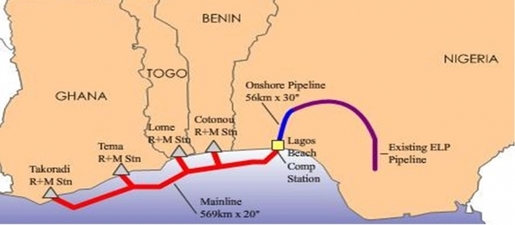
Nigeria has deferred a plan to slash gas exports to Ghana beginning Friday over an outstanding debt of US$181 million, alleviating a threat that could have worsened electricity blackouts in Ghana.
The West African Gas Pipeline Company (WAGPCo) said it was “cautiously optimistic” that Nigeria’s N-Gaz consortium would accept a payment plan by Ghana’s power generation company, the Volta River Authority (VRA), after talks in Accra, Ghana next week.
Ghana gets around 25 percent of its power through gas from Nigeria that flows through the pipeline via Benin and Togo and the threat by N-Gaz to reduce volumes by 70 percent would have raised the cost of supply.
The issue is sensitive for Ghana’s Mahama administration ahead of elections next year that are expected to be closely fought. Mahama and his party already faces an economy that has slowed sharply and power cuts that have angered voters.
Mahama has vowed to end the blackouts by the start of next year and the country’s minister in charge of energy, Kwabena Donkor, has said he will resign if the problem has not been resolved by then.
“By next week we are expecting a way forward. There appears to be a will by all the parties to resolve the issue without the flow of gas being cut off,” Harriet Wereko-Brobby, spokeswoman for the pipeline company, told reporters.
Donkor led Ghana’s delegation to Abuja, Nigeria for emergency talks, and Wereko-Brobby said her company had been told that Ghana paid N-Gaz US$10 million. Ghana’s VRA owes the company US$103 million of the outstanding total.
The power generation company’s problems are a sign of the budgetary stress facing Ghana, a country that is following an International Monetary Fund (IMF) program to “restore fiscal balance”.
Ghana’s exports of gold, and oil helped make it one of Africa’s star economies but a global decline in commodity prices has hit it hard. The Volta River Authority stopped paying its bills in August 2014. Prior to that it had been borrowing money from Ghanaian banks at high interest rates to fund the payments, an energy expert said.
The power crisis stems from a fall in supply from Ghana’s dams, government underpayment to the Electricity Company of Ghana, residents’ illegal consumption and tariffs too low for VRA to recoup its costs, experts said.
In the long term, Ghana aims to solve the problem by greatly increasing its domestic gas production.
Source: Reuters