News
Mali Presidential election run-off: Vote counting begins, Keita remains favorite candidate coming into polls
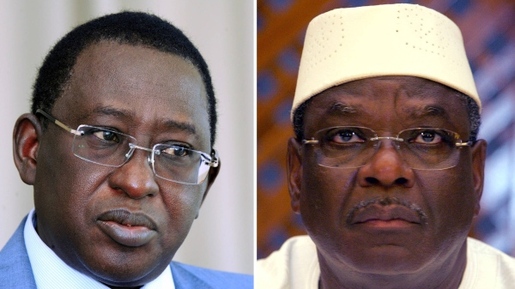
Mali Presidential candidates Soumaila Cisse (l) and Ibrahim Boubacar Keita (r). PHOTO/File
(Reuters) – Poll workers in Mali are counting votes in Sunday’s high stakes presidential runoff, with former Prime Minister Ibrahim Boubacar Keita tipped to claim the difficult job of stabilizing the West African nation after more than a year of turmoil.
The winner of the vote will be able to draw on more than US$4 billion in aid to rebuild the country after military intervention in January routed al Qaeda-linked rebels that had occupied the desert north.
He must also tackle corruption and forge a lasting peace with northern Tuareg separatists after decades of sporadic uprisings, problems that led to the overthrow of president Amadou Toumani Toure in a March 2012 coup and allowed the Islamists to seize the northern two-thirds of the country.
“Whatever the decision of the ballot box, Mali has already won,” Keita, 68, told reporters after voting in the capital Bamako.
“We’ve come together to rebuild a new Mali and give it a new destiny,” said Keita, who is opposed by Soumaila Cisse, 63, a technocrat from northern Mali who headed the West African monetary union (UEMOA).
A trickle of people came out to vote in heavy rains when polling stations in Bamako opened at 8 am local time (0400 EDT). But the turnout picked up as the weather cleared.
Keita’s promises to impose order and restore the honor of a nation once seen as a rare bastion of democracy and stability have struck a chord with voters and won him nearly 40 percent of ballots cast in the July 28 first round.
Twenty-two of the 25 losing first-round candidates have thrown their weight Keita, also known as IBK, who earned a reputation for firmness by crushing student protests and strikes in the 1990s.
Cisse, a former finance minister and vocal critic of the military junta that seized power last year, took 19 percent of the first-round vote with pledges to improve education, create jobs and reform the army.
“I’m proud of our people who have, in such a short time, put us on a path back to the republic and to democracy,” he said.
Voting took place at some 21,000 polling stations across the landlocked nation, from the forested south, home to 90 percent of Mali’s 16 million people, to the northern cities of Timbuktu and Gao, where the al-Qaeda-linked Islamists had imposed sharia law.
A record 49 percent of 6.8 million registered voters turned out to cast their ballots in the first round of the election last month. Observers told reportters that participation appeared to be slightly lower for the runoff, but the vote had been peaceful and free of major technical problems.
“Overall, everything very went well. There was nothing dubious,” Louis Michel, the head of the European Union’s observer mission, told journalists after polls closed at 6 pm (1400 EDT).
“Whoever wins will have been elected in total legitimacy,” he said, as poll workers began counting ballots by candlelight in a classroom of the Djikoroni Para primary school in Bamako. Final results are expected in two or three days, and the constitutional court has until Friday to certify them.
After challenging the result of the July 28 election, alleging fraud, Cisse promised to accept the second round’s outcome.
Many Malians hope this election can change a system of “consensus politics” under which Toure seduced political opponents with government positions and failed to undertake reforms, discrediting his government in the eyes of voters. “I think we will see a change,” said Chris Fomunyoh, senior associate for Africa at the National Democratic Institute in Washington. “The personality differences between the candidates are so great that whoever loses will create a real opposition.”
Keita has captured the popular mood by avoiding outspoken criticism of the coup leaders who toppled Toure, earning the tacit blessing of the military. He has also successfully courted Mali’s powerful Islamic clerics, some of whom have endorsed him.
Critics say Cisse, who condemned the coup, supports the corrupt political class, but he rejects the claim, saying he is a defender of democracy.
The African Union has been pushing for the vote to be held to replace the weak interim administration that has led the country since the military junta agreed to hand over power to a civilian transitional administration in April 2012.
Tuareg separatists, once allied with Islamist fighters allowed voting to take place after Bamako agreed to discuss their demands of autonomy for the sparsely populated homeland they call Azawad. “This election can bring peace if there is a president who takes negotiations seriously,” said Abarkan Ag Abzaik, mayor of Kidal, where pro-independence graffiti covers walls and the red, yellow, black and green flag of Azawad is everywhere.
Source: Newswires