News
Kenya on the verge of breaking China’s dominance on rare earth metals
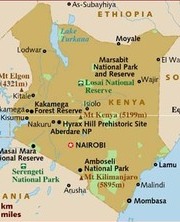
Kenya is on the cusp of becoming a direct competitor to China as a major producer of rare earth minerals.
Mineral explorer Cortec has announced that it has discovered rare earth deposits and niobium – used to strengthen steel, worth US$ 100 billion in the country’s coastal area.
Rare earth elements are used in the manufacture of high tech electronic products such as specialized miniature nuclear batteries; laser repeaters; super conductors and high power magnets for lightweight electric motors and (MRI) imaging. They are also used in manufacture of car engines and chemical factories, rechargeable batteries and generators for wind turbines. It is red phosphors from rare earth elements that made the color television possible, and by extension, computer screens, laptops and mobile phones.
There are 17 rare earth elements, 15 within the chemical group called lanthanides including yttrium and scandium. What makes them valuable in manufacturing is the way they interact with other elements to get results that each could never achieve alone.
“This is by far the largest mineral deposit in Kenya and the find, will make Kenya one of the largest rare earth producers in the world,” said David Anderson, managing director of Cortec Kenya Mining.
A global scarcity of rare earth in a market largely controlled by China has kept prices high, with Japan, which accounts for a third of all global demand, hard-hit by scarcity and looking to diversify its supply sources. China has been supplying 90 percent or more of the world’s rare earth minerals for over a decade, however, it is also the largest consumer – 72 percent last year alone. China’s dominance has kept prices high, and has created incentives for miners to flout rules, as global demand surges, with illegal production and smuggling still rampant.
If Cortec Kenya’s tests are confirmed, the east African country will serve the hungry global market including Africa that is scrambling for the meagre supply of the element. With the demand rising in China as its electronics market grows, the country could only produce enough of some elements for its own needs and limit some exports, giving new entrants like Kenya a chance to capture the global market.
World demand for rare earth elements is estimated at 136,000 tons per year, with global production around 133,600 tons in 2010. The difference is covered by previously mined stocks. Global demand is projected to rise to at least 185,000 tons annually by 2015.
Although many of the rare earth metals are not necessarily rare to find — some are more abundant in the earth’s crust than lead, gold, copper or platinum — they often exist in very small concentrations, making extraction difficult and prohibitively expensive. And because of their similar chemical properties, rare earths tend to clump together, usually with radioactive elements such as thorium and uranium, making separation complicated and expensive.
(More: Jamaica launches rare earth metals project)
Earlier this year it was reported that Jamaica is in the process of determining whether rare earth elements can be commercially extracted from the island nation’s abundant bauxite waste. This was a follow-up to research that determined that concentrations of rare earth elements in the island nation’s red mud – a development that could positively impact to country.