Politics
Is Africa’s Nuclear Power Renaissance Heading Into An Abyss?
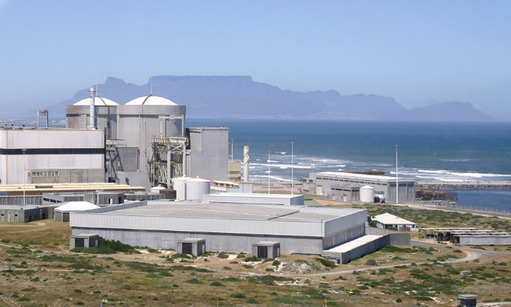
South Africa, which currently relies on coal for more than 85 percent of its electricity, wants to wean itself off fossil fuels by using more nuclear power by 2030. Kenya, Nigeria, and other sub-Saharan countries have similar aspirations and are not far behind. It’s a gutsy move for South Africa. Nuclear power plant construction has stagnated worldwide.
South Africa President Jacob Zuma said in his Feb. 13 State of the Nation address, “We expect to conclude the procurement of 9,600 megawatts of nuclear energy…Having evaluated the risks and opportunities, the final regulations will be released soon and will be followed by the processing and granting of licenses.”
The $37-billion nuclear expansion is part of South Africa’s Integrated Resources Plan (IRP), a 20-year strategy to balance electricity supply and demand. Nuclear power plant construction has stagnated worldwide, according to an October 2013 report from U.S.-based Worldwatch Institute.
Nuclear is the only mainstream power source – including all of the renewables and all the fossil fuels – that is stagnant and has actually had negative growth, said Alexander Ochs, director of the Climate and Energy Program at Worldwatch Institute, in an AFKInsider interview.
The reason for that stagnation of nuclear? It’s not that countries are forbidden to build them — it’s simply economics, Ochs said. Utilities are unwilling to carry the high costs and the high risks. South Africa has the only nuclear power plant in Africa, operating two 900-megawatt nuclear reactors at Koeberg. It produces around 5 percent of its electricity, according to the South African Department of Energy