Life
Holness says failing schools can’t be ignored
EDUCATION MINISTER Andrew Holness says the issue of failing schools cannot be ignored and has signalled that no effort will be spared to transform these institutions. “Education is so important to national development that we cannot sit by and allow…
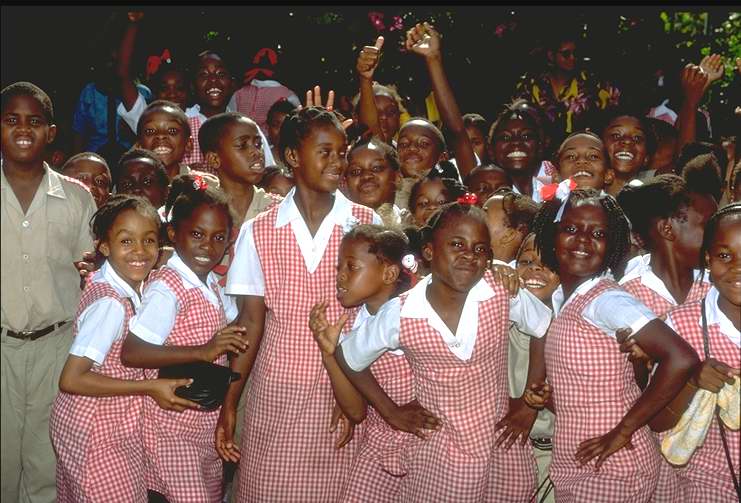
Jamaica’s education Minister Andrew Holness says the issue of failing schools cannot be ignored and has signalled that no effort will be spared to transform these institutions.
“Education is too important to national development that we cannot sit by and allow any of our schools to fail in the service of our children,” the minister said in his back-to-school message Sunday.
In what appeared to be a thinly veiled jab at the Jamaica Teachers’ Association (JTA), which has lambasted him for labelling some institutions failing schools, Holness said the Government had decided to confront “the difficult and controversial issues in education”.
“We are aware that such a move will not be without resistance, however, we are resolute and committed to transforming Jamaica through education,” Holness said.
Former JTA president, Nadine Molloy-Young, last month urged the minister to desist from using the label of failing schools.
“… You know that the essential ingredients necessary to our children’s performance are missing, and it’s not the fault of the teacher,” she said.
This past Sunday, new president, Paul Adams, stressed to teachers that “despite the challenges, you will have a learning environment which will afford you the opportunity to achieve your full potential”.
Meanwhile, Holness, pointing to measures such as the Jamaica Teaching Council and the National College for Education Leadership, which he said would be operational before the end of the year, said they would transform the management and instructional paradigm of schools in Jamaica.
The National College for Education Leadership, Holness said, is expected to create a new generation of principals who will be empowered with the necessary skills set to effectively manage schools before they are appointed as principals.
“We believe that with the right leadership and strong policy support from the Ministry of Education we can raise failing and low-performing schools to the level where they contribute meaningfully to the development of every student under their care, the community in which they exist, and the national good,” Holness said.
He added: “We believe that it is, the school, in partnership with the family and Church, that will shape the Jamaican society to be the place of choice to live, work, raise families, and do business.”
Jamaica’s educational system has been haemorrhaging at severe levels with approximately half of the annual cohort leaving school without certification.
In acknowledging the challenges, Holness said, “Too many Jamaican students end up in dysfunctional schools that are not able to serve their needs, and their talents and strengths are wasted, lost to the society forever.”
He said a significant number of students were not attaining a general education standard to earn them a place in a high school, or to allow them to manage a high-school curriculum if they were placed there.
“Too many students are completing high school functionally illiterate, maladjusted, unexposed, and unprepared for the challenges of a modern economy, adulthood, and citizenship,” he said.
“Our education system has been functioning like this for many decades. From an economic perspective, it has contributed to Jamaica’s wide income inequality, low productivity, and large number of uncertified and unskilled workers in our labour force,” the minister said.
Source: The Gleaner