Business
Grenada default elevates risk of spilling over into other Eastern Caribbean Currency Union states – Moody’s
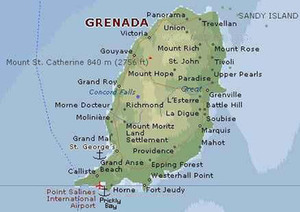
A major international credit rating agency says the liquidity crisis leading to Grenada default on its US and Eastern Caribbean (EC) dollar bonds is “credit negative” for the country and elevates the risk of distress spilling over to member countries in the Eastern Caribbean Currency Union.
The newly-elected Keith Mitchell administration in Grenada said it would default on the bonds due 2025 because it is unable to secure financing to make a coupon payment on Friday.
The Wall Street-based Moody’s Investors Service said Grenada’s default has “systemic implications for the Eastern Caribbean Currency Union through two channels, financial and institutional”.
It said Grenada’s default will elevate short term financing costs for its peers that issue local currency (EC dollar) bonds and treasury bills on the Eastern Caribbean Currency Union’s Regional Government Securities Market (RGSM).
Moody’s said sovereign defaults have also weakened the balance sheets of banks and institutional bondholders in the region.
On institutional, it said pre-emptive debt restructuring, primarily targeting external, foreign currency bonds “has become a more acceptable option for policymakers in the region, indicating a diminished willingness to service sovereign debt”.
Moody’s said the default is Grenada’s second since 2004, mirroring wider distress in the Eastern Caribbean Currency Union.
It said that St. Kitts & Nevis defaulted on its debt in 2011, and Antigua & Barbuda restructured its debt in 2010.
Moody’s said both countries have active International Monetary Fund (IMF) stand-by programs “with embedded conditionality and structural reform requirements” while all six Eastern Caribbean Currency Union members, which also include St. Vincent & the Grenadines, St. Lucia and Dominica, “rely on emergency IMF credit facilities for financing reconstruction following the impact of hurricanes”.
The credit rating agency said government debt in the Eastern Caribbean Currency Union is “high,” adding that the regional average was 94 percent of Gross Domestic Product (GDP) in 2012, putting it “on par with distressed Euro area sovereigns”.
Moody’s said regional GDP contracted at an average rate of 2.1 percent between 2009 and 2012, adding that it expects “only a modest recovery in 2013”.
In addition to the debt overhang, it said Eastern Caribbean Currency Union sovereigns face elevated risks stemming from twin current account and fiscal deficits.
“Absent a currency devaluation or exit from the union, which are both unlikely options at this time, policy levers for addressing these imbalances and repairing sovereign balance sheets are limited to a severe domestic adjustment through fiscal consolidation and structural reforms to stimulate growth.
“For a number of sovereigns in the region, these reforms may not materialize fast enough to arrest rising sovereign financing needs, leading to liquidity crunches,” Moody’s said, adding that a sustained reduction in debt in the region over the next decade will require “some combination of aggressive fiscal consolidation and an improvement in growth”.
However, it said both of these goals are increasingly out of reach, stating that budgets are “largely inflexible, limited by high and rising interest costs and expenditure on wages and social benefits”.
Moody’s said diminishing returns to the Caribbean tourism-centered growth model, combined with depressed public sector investment in infrastructure, have resulted in a “ratcheting down of trend growth that will be difficult to reverse”.
Moreover, it said growth in the Eastern Caribbean Currency Union is “acutely vulnerable” to volatility in external demand and weather-related shocks and that it views more indirect approaches to reducing the debt burden as less feasible in the ECCU.
It said monetizing domestic currency debt through inflation is not a viable option under the current quasi-currency board arrangement, and that the Eastern Caribbean Currency Union lacks the “fiscal firepower” to finance an emergency lending facility along the lines of the European Stability Mechanism.
Moody’s also said IMF financing remains the sole source of emergency external liquidity support for the Eastern Caribbean Currency Union.
It said debt mutualization within the currency union “a potential long-term solution to the liquidity pressures facing issuers in the Euro area, is far from becoming an economic reality in the Eastern Caribbean Currency Union since all of the sovereign member states currently carry unsustainable debt loads”.
“This dearth of options has elevated debt restructuring as a tool for reducing government debt. However, the history of sovereign default in the Caribbean is instructive,” Moody’s said, noting to date, restructurings in the region have done little to address the threat of insolvency posed by unmanageable debt burdens.
Instead, Moody’s said most countries have received only temporary liquidity relief, “which has only increased the frequency of sovereign default”. – (CMC)