Business
Foreign Interests Mar Haiti’s Recovery
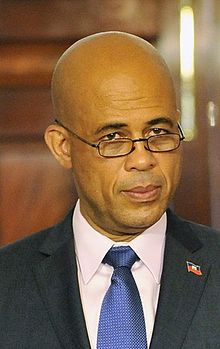

It has now been four months since the conclusion of the two-round presidential and legislative national election in Haiti. The presidential winner, Michel Martelly (pictured), has failed to form a government that could begin to tackle the enormous challenges facing the country. Instead, he has embarked on a political project to appoint one or another of his right-wing cronies to the post of prime minister. The legislature (whose vote of approval is required) has clearly indicated that it will not accept such a partisan nomination (having recently rejected Martelly’s nomination of Bernard Gousse, the second of two such defeated nominees), yet the president presses on, seemingly determined to stir up popular opposition to “stubborn and unreasonable” legislators in order to get his way. Instead of a plan for national reconstruction, Haiti gets a debilitating and destructive political dispute.
The election was marked by a host of obstacles to voter participation, including the massive disruption caused by the earthquake, inadequate voter registration, and an insufficient number of ballot stations – a fraction of the number that existed in previous elections. Haiti’s most representative political party, the social reform Fanmi Lavalas of former president Jean Bertrand Aristide, as well as smaller parties, were formally excluded from participation. In the end, less than 25 percent of Haitians took part.
Aid makes governments unaccountable to their own people – with devastating results. Read more here.
Haitian and international political-rights organizations (including 45 members of the U.S. Congress) said from the get-go that a fair election could not be held under these circumstances. But the foreign powers that have dominated Haiti since the overthrow of the elected government in 2004 were determined to get a pliant and reliable president into office. They paid for the election and dismissed all criticism of its shortcomings.
Critics were proven correct during the first round of voting on November 28, 2010. That exercise was termed a “fraud” or “fiasco” by nearly every independent observer on the ground. Nonetheless, the top finishers proceeded to a second round on March 28, 2011. As planned, the winning candidate for the presidency is a trustworthy representative of Haiti’s economic elite and its foreign allies.
Foreign powers have conspired for decades to enfeeble Haiti’s government and national institutions, a history that Dr. Paul Farmer explains forcefully in his just-published book, Haiti After the Earthquake. The election of Michel Martelly is just another chapter in this long story.
On June 28, 2011 the International Crisis Group (ICG) released a report that contained the following comments on the political paralysis in Haiti and its implications for the post-earthquake humanitarian crisis:
Eighteen months after the earthquake, the future remains uncertain for most citizens – in part because they have not been sufficiently included in the decision-making processes. Forced evictions from camps have caused further disruption in the lives of the displaced.
Local solutions to Haiti’s crisis are being overlooked in favor of foreign profits. Learn more here.
Western media have not given Haiti’s reconstruction plan, or lack thereof, due attention. Next to nothing has been reported. While the ICG report, as well as many other reports in recent months, have looked at governance, shelter and housing, health care (including the cholera epidemic that won’t go away), and many other dimensions of Haiti’s crisis in considerable detail, these issues have gone largely unreported. (The latest in-depth print analysis on this topic in international media appears in the Aug. 4 edition of Rolling Stone.)
Western assistance to Haiti is also rarely examined. At the government level (as opposed to the role of aid agencies and individual citizens), “assistance” to Haiti from a western country like Canada, is focused exclusively on the training of police and the equipping of prisons.
The record of Canada’s parliamentarians is equally uninspiring. Few have shown any serious, ongoing interest in critically examining Haiti, or in proposing new ideas and alternative approaches. The Standing Committee on Foreign Affairs and International Development rarely discusses Haiti, and, when it does, its chosen sources of information are selective and limited.
Haiti doesn’t just need immediate assistance; it also needs long-term, sustainable development.
A recent delegation to Haiti has issued a 17-page report on its findings. It observed a country in political and social crisis, and in which little measurable progress is being made towards meaningful and lasting development. You can read the report here. This report will be circulated to members of Parliament, print and broadcast media, and the many social and political organizations that have shown interest and concern for Haiti. It is hoped that this may encourage more discussion regarding Haiti’s fate, including what has worked and what must change in the West’s role in providing assistance.
Source: The Mark News