Business
Energy, Enery; Energy!
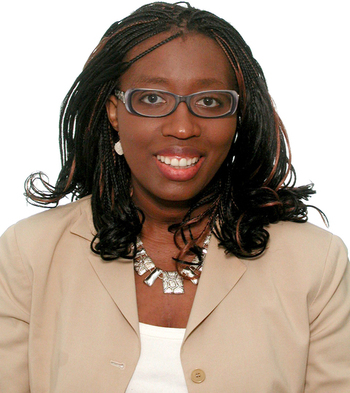
THN: From your standpoint, what should be done to enhance or increase the sheer volume of business between the U.S. and Africa?
VS: First, this has to be seen as a two-way street: On the one hand, the basket of goods approved under the AGOA market access program needs
to be expanded, especially in regard to the tariff rate quota (TRQ) on agricultural products. While I appreciate how difficult the process to achieving this might be, Africa must, at the same time, actively set about meeting the standards required to export – and this, Africa needs support from the U.S. to achieve this feat. Secondly, on the U.S. side, what we may need is a set of incentives to U.S. businesses – enabling them to come to Africa. And here, I do not necessarily mean monetary incentives. U.S. firms need to know that you can do good honest business in Africa. Therefore initiatives like President Barack Obama’s Power Africa and Trade Africa are important endorsements. Just the fact that Obama came to Senegal, South Africa and then Tanzania with leading policy makers and business people has generated a huge amount of excitement. Irrespective of how much was pledged for Obama initiatives, the exposure and interest generated may end up giving Africa returns double or triple the pledges.
U.S. businesses also stand to profit substantially from both the Obama initiatives and from the trip. So, to go back to your question, it is important
that AGOA is seen as a preference program that is mutually beneficial for U.S. and African businesses. AGOA could accelerate industrialization of the
continent, underpinned by systematic knowledge and technology transfers.
THN: Before we discuss the role the World Bank Group can play, could you just expound your comment on incentives?
VS: If we move away from just incentives, what one may have to do is provide more information about what is going on in the continent, how to invest – facilitating more American Chambers of Commerce and businesses like is done for the Asian countries. This is something that could be started in Africa, although you may not even necessarily need to do it for countries. Instead, you could focus on regions: For example, a U.S. – West African Chamber of Commerce or a U.S. – SADC Chamber could help U.S. businesses better navigate African markets.
Now, to the World Bank Group, we can write or talk about opportunities in Africa. And we could also help African economies improve their policy
via trade facilitation and in particular their Doing Business environment. This is something we are already doing. I also think we can provide risk capital or guarantees to facilitate investment.
There are many attractive business ventures on the continent and the World Bank can help identify and structure investment opportunities so they are
attractive to U.S. investors. Tullow Oil, for example, is drilling for gas in Mauritania, and the World Bank is providing a US$600 million guarantee to ensure the investment is made. We are also providing the government with a partial risk guarantee to cover associated power generation. Overall, the World Bank can help provide additional mechanisms for buying down risk on the continent.
THN: While all this is happening, what should the African countries and their governments do to help grow their portfolio of investors?
VS: The first thing on everyone’s list is that African countries should maintain sound macro economic fundamentals: Sustainable debt and deficit levels, good expenditure efficiency and levels combined with proper revenue collection. On top of lowering the risk perception, interest rates or cost of investing in the respective country, these aspects contribute to the macro economic stability package and show potential investors that countries are disciplined. Fortunately, many countries have lower deficits, lower debt to groos domstic product (GDP) ratios and acceptable current account balances, and the storyline today around Africa’s macro management is much better than it was only a few short years ago. Clearly, with the recent global financial crisis, some countries undertook counter cyclical spending, increasing the deficits – but most countries started to rein this in.
THN: What tenets should guide the U.S. – Africa commercial partnership going forward?
VS: I think Tenet 1 should be that because bilateral negotiations are both premature and not the ideal between an economy of the U.S.’ size and any African country, the U.S. ought to engage in trade discussions with Africa from a regional perspective. In the event that this is challenging at entry, the creation of active sub-regional economic zones could provide a second best alternative. The Trans-Atlantic Trade and Investment Partnership (T-TIP) between the U.S. and Europeo are models to be emulated in Africa. The advantage here is that businesses coming to sub Saharan Africa will have a level playing field across the region.
It is essential to ensure coherence between the multiplicities of bilateral trade relations African countries sign. For example, economic partnership
agreements are due for completion in 2014; AGOA is coming up for renewal in 2015, while the continent has, since 2012, engaged in a process of negotiating a continental Free Trade Agreement (CFTA), a key element for consolidated rules of origin that would not discriminate against any trading partners. Harmonization will be a catalyst for deeper regional integration and making the region more competitive.
Secondly, the U.S. should broaden the coverage of AGOA eligible goods to help spur the development of a sub Saharan manufacturing sector. For this to
be even more beneficial, the skills gap must be filled via education and technology. These two things are clear ways of increasing productivity and
accelerating inclusive growth. Basically, for high quality goods to be exported to the U.S., we need to increase the supply of quality labor.
THN: Some of these might be addressed by Froman’s request for a U.S. – Africa trade review.
VS: So, while I cannot make any substantive comments about Dr. Froman’s request for a review, perhaps I am better placed to make a more general observation. More than anything else, it is important that there must be a discussion around agricultural products in the U.S. itself. The U.S. and G-8 countries’ push to support African agriculture is a welcome initiative, however to credibly export products like peanuts to the U.S. market, for example, the market entry conditions must be reviewed to avoid what sometimes appears to be contradictory polices. If agriculture subsidies to U.S. farmers are maintained, the benefits of AGOA for Africa could remain compromised, as those excluded products could be what undermines Africa’s competitiveness. In this regard, US could take the lead and fully engage in multilateral negotiations within the WTO negotiations framework to help countries review and amend agriculture policies. In addition for some goods like cotton, more technical assistance would be needed to improve the overall performance of the sector.
THN: What about South Africa?
VS: It is true that South Africa is a special case on the continent: It is, in the first place, a dual economy, that is a middle-income country but also grappling with high levels of unemployment and poverty. And if the purpose of AGOA is to increase the amount of trade between U.S. and Africa, South Africa still needs access to the U.S. market. Because unemployment is still high, we need to ensure that the economy there is still developing, able to export and also building a stronger manufacturing base that contributes to Africa’s economic integration. And here, the reality is that South Africa continues to produce competitively and export to the U.S. Hence, the minute you start taking one African country out of AGOA, you start down a slippery slope – and people will ask: Why not graduate Nigeria, Kenya or Ghana, Angola or Equatorial Guinea? They are, after all, considered non-LDCs. And here, we, perhaps, return to the question of treating each country as an individual – which will weaken the regional integration agenda.
There are important positive externalities for neighboring countries and the region as a whole, which cannot be ignored. One could even make an
argument that the U.S. is negotiating with the EU as a whole and not singling out Germany. So, we have to be very careful about these things.
THN: How can anyone improve the business environment in Africa so that American’s private sector can see the opportunities there?
VS: The U.S. private sector is looking for profit. They need to add value for their shareholders. They will not come to the continent if its not deemed profitable. This is not charity. This is business. So, until Africa removes the stumbling blocks, progress is bound to be slow. On the supply side, Africa must take care of three things: Energy. Energy. Energy. Years ago, it was macro economic issues and then governance and then energy. But like the Mo Ibrahim Foundation argues, availability and cost of energy is now an even more important constraint than governance.
In fact, the governance issues are being addressed. But if you have a continent whose production costs, by definition, are three to four times higher than everyone else’s, then the battle is lost at entry. That is why the Power Africa initiative is critical and timely. Africans themselves have begun to focus more on energy – Kenyan president, Uhuru Kenyatta, is working on an ambitious 5000 Megawatt plant to reduce the cost of doing business in Kenya. Privatization of Nigeria’s energy sector should see the rapid rise of power supply. As part of the Obama Initiative, luminaries like Tony Elumelu are working on energy projects. On the agriculture side, many studies have shown that several African products are competitive at the farm gate – but then most of this is lost in transportation. Issues of trade facilitation and farm to market connectivity are also important elements of the competitiveness basket.
Vera Songwe is the World Bank’s Country Director for Senegal, Cape Verde, The Gambia, Guinea Bissau and Mauritania. She was most recently a Lead Economist at the World Bank where she worked in East Asia, the Middle East and North Africa, South Asia as an economist providing policy advice to governments and the private sector. She was also Country Sector Coordinator for East Asia and the Pacific region on Poverty Reduction, Economic Management and other aspects. Her areas of expertise are governance, fiscal policy, competitiveness, trade, financial markets, and agriculture and commodity price volatility, and
she’s very well published on these subjects. A nonresident Senior Fellow at the Brookings Institution, Songwe has a PhD in Mathematical Economics, and BA in Economics and Political Science.