Business
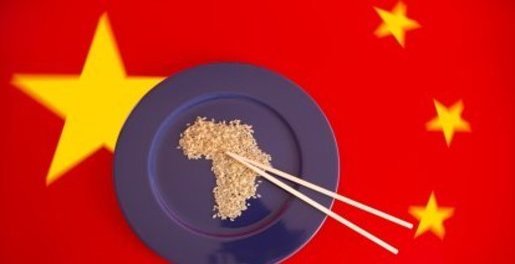
China’s slowdown: What it means for African trade
By Kate Douglas
China’s slowing growth, coupled with the fall in commodity prices, could see African exports to the Asian country almost halve in value this year – from a reported US$116 billion in 2014 to around US$60 billion. This is according to recent research by Standard Bank’s senior political economist, Simon Freemantle.
Over the past 15 years, China has become Africa’s largest trading partner. However, with exports to China remaining generally un-diversified and consisting mostly of commodities, the continent has grown dependent on Chinese demand. Two-thirds of the value of African exports to China last year consisted of crude oil or base and precious metals, notes Freemantle.
Statistics show that while Chinese imports of key commodities were up in 2014, there was a slowdown in demand momentum compared to previous years.
“For instance, though between 2013 and 2014 Chinese imports of iron ore lifted by 14 percent; of copper by 18 percent; and of crude oil by 9 percent, these rates were all inferior to the general pace of growth achieved since 2008 (let alone between 2003 and 2007),” writes Freemantle.
Other commodity imports – such as coal, manganese and chromium – had all declined from the previous year.
However, trade statistics for the first half of 2015 most acutely portray how the pace of growth of Chinese commodity imports has slowed. For example, in the first six months, China imported 0.9 percent less iron ore than during the same period the previous year.
“Should this trend continue, China is set to record a year-on-year fall in iron ore imports for the first time in over two decades.”
This slowing demand can be seen over the last 2 years, and indeed the first few months of 2015, in terms of value of African commodity imports, with the fall in commodity prices playing a large role. In the first quarter of 2015, the value of crude oil imports from Africa was 50 percent less than the it was in the first quarter of 2014. In addition, iron ore imports contracted 55 percent in value terms, while copper imports from the continent slid 39 percent.
“Should the rest of 2015 proceed in much the same fashion as it started – as reflected by the first quarter of 2015 trade data – it is safe to assume that this year will see a profound dip in the value of African exports to China,” continues Freemantle.
Which African countries will be impacted the hardest?
In 2014, almost 80 percent of China’s crude oil imports from Africa came from Angola, Republic of Congo, Sudan and South Sudan – with Angolan exports making up 61 percent. Crude oil exports from Equatorial Guinea and Nigeria account for 5 percent and 3 percent respectively.
Trade data from the first quarter of this year reveal the impact the drop in the oil price had on the value of crude oil imports from Africa. Angola’s oil exports to China were valued down 50 percent from exports in the first quarter of 2014, while Sudan and South Sudan were down 58 percent and Equatorial Guinea down 53 percent.
However, more importantly, countries such as Sudan and South Sudan exported almost 90 percent of its total crude oil to China last year, whereas the Republic of Congo exported 65 percent and Angola 50 percent – revealing a reliance on Chinese demand. Conversely, China only absorbed around 2 percent of Nigeria’s total crude oil exports in 2014.
In iron ore, 95 percent of Chinese imports from Africa came from 3 countries in 2014 – South Africa (62 percent), Sierra Leone (21 percent) and Mauritania (12 percent). Around 73 percent of South Africa’s total global iron ore exports were absorbed by China, illustrating the country’s exposure to a Chinese slowdown.
The impact of the fall in the iron ore price, as well as cooling Chinese steel production growth, has been felt in the first quarter of 2015 too, noted Freemantle. The value of South Africa’s exported iron ore to China dropped near 56 percent from the first quarter of 2014, while exports from Sierra Leone were down almost 80 percent and Mauritania over 74 percent. In Sierra Leone, production at its Tonkolili Mine, which holds the world’s largest iron ore deposits, has also been halted.
And in copper, 87 percent of Chinese imports from Africa in 2014 originated from Zambia and the Democratic Republic of Congo (DRC), with a further 7 percent from South Africa. Roughly 40 percent of Zambia’s total copper exports were absorbed by China, 42 percent for the DRC, and near 60 percent for South Africa.
In the first quarter of 2015, copper exports to China are down 51 percent in value compared to the same period in 2014, while exports from the DRC slid almost 30 percent. However, iron ore exports from South Africa to China lifted almost 3 percent between first quarter of 2014 and 2015.
Investment and political relations
Despite the Asian powerhouse’s slowing growth and its resulting knock to commodity imports from Africa, Freemantle expects the Chinese government and firms to continue their long-term strategic geopolitical relationships and investment across the continent.
“Given the fact that Beijing has locked key relationships across Africa, and arguably forged sufficient political momentum for its state-owned entities, as well as private sector firms, to continue to expand across the continent, it would not constitute an unqualified leap to assume that some lessening of China’s political ambitions would accompany its latest economic challenges, and inward-view,” he states.
“Though not implausible, this is unlikely to materialize – since assuming the helm in 2013, President Xi Jinping (who paid his first overseas trip as head of state to Africa) has continued to emphasize the importance of deeper political relationships with Africa.”
He added that the Forum on China-Africa Cooperation (FOCAC) will be hosted by South Africa in early December and will allow a range of politically-inspired financing commitments from Beijing.
A version of this article was originally published at How we Made it in Africa.