Business
BRICS nations to set up development bank to bypass World Bank and IMF
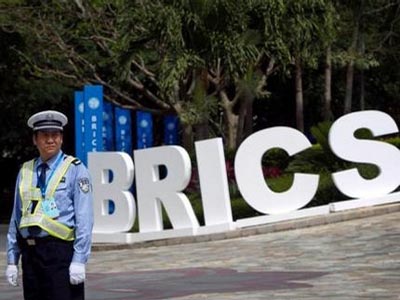
The establishment of the BRICS bank will provide the emerging economies in Africa and the Caribbean with an alternative to the IMF and World Bank
(Bloomberg) – The biggest emerging markets are uniting to tackle under-development and currency volatility with plans to set up institutions that encroach on the roles of the World Bank and International Monetary Fund (IMF).
The leaders of the BRICS nations — Brazil, Russia, India, China and South Africa — are set to approve the establishment of a new development bank during an annual summit that began today in the eastern South African city of Durban, officials from all five nations say. They will also discuss pooling foreign-currency reserves to ward off balance of payments or currency crises.
“The deepest rationale for the BRICS is almost certainly the creation of new Bretton Woods-type institutions that are inclined toward the developing world,” Martyn Davies, chief executive officer of Johannesburg-based Frontier Advisory, which provides research on emerging markets, said in a phone interview. “There’s a shift in power from the traditional to the emerging world. There is a lot of geo-political concern about this shift in the western world.”
The BRICS nations, which have combined foreign-currency reserves of US$4.4 trillion and account for 43 percent of the world’s population, are seeking greater sway in global finance to match their rising economic power. They have called for an overhaul of management of the World Bank and IMF, which were created in Bretton Woods, New Hampshire, in 1944, and oppose the practice of their respective presidents being drawn from the U.S. and Europe.
Reform Needed
“We need to change the way business is conducted in the international financial institutions,” South African International Relations Minister Maite Nkoana-Mashabane said in a March 15 speech in Johannesburg. “They need to be reformed.”
The United States has failed to ratify a 2010 agreement to give more sway to emerging markets at the IMF, while it secured Jim Yong Kim, an American, as head of the World Bank last year over candidates from Nigeria and Colombia.
Goldman Sachs Asset Management Chairman Jim O’Neill coined the BRIC term in 2001 to describe the four emerging powers he estimated would equal the U.S. in joint economic output by 2020. Brazil, Russia, India and China held their first summit four years ago and invited South Africa to join their ranks in December 2010.
Trade within the group surged to US$282 billion last year from US$27 billion in 2002 and may reach US$500 billion by 2015, according to data from Brazil’s government.
The finance ministers of the BRICS countries who are meeting on Tuesday — a day ahead of the fifth summit, will arrive at an agreement on the issue. However, it may take a few years before it becomes a reality as there are several issues to be sorted out among the partners, said an Indian government functionary who did not want to be named.
“After the declaration, it will take at least one year for its documents to be ready, and some more years before it starts functioning,” the Indian functionary said. Though the bank was originally planned to primarily fund infrastructure projects in BRICS countries, currently there are divergent views regarding its mandate and design, he said. “There are issues regarding its capital, governance and membership,” he said.
The current proposal is for the five member countries to contribute US$10 billion each, making a total of US$50 billion.
African Leaders
For South Africa, the summit is a way to showcase its role as an investment gateway to Africa. President Jacob Zuma has invited 15 African heads of state, including Egypt’s Mohamed Mursi and Ethiopia’s Hailemariam Desalegn, for talks with the BRICS leaders at the summit.
For most of the BRICS leaders, it’s also the first opportunity to meet Chinese President Xi Jinping after his appointment on March 17. “We will discuss ways to revive global growth and ensure macroeconomic stability, as well as mechanisms and measures to promote investment in infrastructure and sustainable development,” Indian Prime Minister Manmohan Singh said in a statement yesterday.