Business
Barbados: Tax changes announced in 2012-13 budget
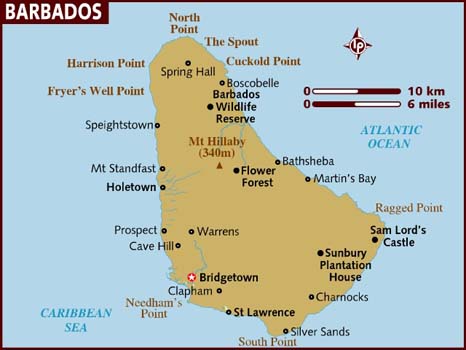

Barbados has announced numerous changes to the nation’s tax regime in the 2012-13 Budget. Some of the changes include revisions to the corporate and personal income tax regimes, land tax changes, and a tax amnesty.
The Barbados 2010-13 budget is again one of austerity, it aims to narrow the nation’s deficit, which shrank from BB$ 720 million (US$ 360 million) in the fiscal year 2010-11, to BB$ 389 million (US$ 194.5 million) in fiscal year 2011-12, or 4.5 percent of gross domestic product (GDP).
Value-added tax (VAT) was increased from 15 percent to 17.5 percent, the excise tax on gasoline and diesel was increased by 50 percent, and the tax-free allowances for certain workers were removed. The government of Barbados has revealed that it is to maintain these measures, with small changes to the latter for 2012.
The value-added tax (VAT) rate is to be made permanent, and the excise duty rates on gasoline and diesel will remain for as long as oil prices are lower than US$ 95 a barrel.
The Barbados government will not reinstate the personal income tax concessions repealed in 2010.
The lowest rate of personal income tax will be lowered from 20 percent to 17.5 percent, applicable on income of less than BB$ 30,000 (US$ 15,000) up from BB$ 24,200 (US$ 12,100) previously.
A rate of 35 percent will continue to apply on income over BB$ 30,000 (US$ 15,000).
In addition, a new levy to fund environmental inititiatives is proposed to be introduced on personal income, at rates of:
0.1 percent on income between BB$ 25,000 (US$ 12,500) and BB$ 50,000 (US$ 25,000);
0.15 percent on income between BB$ 50,000 (US$25,000) and BB$ 100,000 (US$50,000); and,
0.25 percent on income above BB$ 100,000 (US$ 50,000).
Major changes are also proposed to corporate income tax. The proposals are in response to a Canadian tax law change, which came into effect in January 2010, and extended benefits to Tax Information Exchange Agreement signatory nations that were previously only provided for nations with a Double Tax Agreement with Canada, such as Barbados.
Prior to the change, Barbados had since 1995 been the lowest tax jurisdiction for companies seeking to generate exempt surplus, ie. taxed income in Barbados that could be repatriated to Canadian parent companies without further tax being incurred by the parent companies. However, as a result of the law change, tax-neutral territories such as Bermuda, the Bahamas, and the Cayman Islands are now able to offer the same benefits.
In an effort to maintain the attractiveness of Barbados’s international financial center for Canadian businesses, the government has proposed to reduce the corporate tax rate applicable to companies taxable under the International Business Companies Act and the Restricted Liabilities Act.
Amendments to the two Acts will set the tax rate on the highest band for taxable income for income years 2012 and 2013. The changes will establish a corporate tax rate of:
2.5 percent on all profits and gains up to BB$ 10 million (US$ 5 million);
2 percent on all profits and gains exceeding BB$ 10 million (US$ 5million) but not exceeding BB$ 20 million (US$ 10 million);
1.5 percent on all profits and gains exceeding BB$ 20 million (US$ 10 million) but not exceeding BB$ 30 million (US$ 15 million); and,
0.5 percent on all profits and gains in excess of BB$ 30 million (US$ 15 million).
It is proposed that this lower band of 0.5 percent will be revised downward to 0.25 percent from the income year 2013-14. These changes are to apply to legislation for Societies with Restricted Liabilities as well as Offshore Banks. In addition, the range of services eligible for the Foreign Currency Earnings Credit will be expanded to include exploration, extraction and other mining, oil and gas activities, licensing and sub-licensing of intellectual property and shipping services.
Changes to land tax policy are proposed to increase the land tax rebate for pensioners to 60 percent from 50 percent. In addition, an amnesty is proposed to be launched for thirty days starting July 2, 2012.
The amnesty will cover unpaid land tax balances for fiscal years dating between 1981-82 to 2011-12. It is proposed that under the amnesty, there will be a full waiver of both the penalty and interest due on the unpaid tax, dependent on the full amount of principal being paid in a one-off payment for the respective year due.
Other changes include a 25 percent reduction in excise duties on imported cars, with the chargeable value of a vehicle capped at BB$ 55,000 (US$ 27,500), up from BB$ 45,000 (US$ 22, 500) previously. In addition, the concessionary treatment of locally-manufactured vehicles will be repealed, and these vehicles will be subject to the same rates applicable to their imported counterparts of between 20 percent to 120 percent, depending on the model.
Other changes in the budget include the introduction of a number of tax concessions, particularly VAT exemptions for alternative energy product suppliers, and reduced duties on vehicles that are powered by eco-friendly fuel sources.
In addition, new residence permits are to be granted to High Net Worth Individuals, on a number of conditions, including that their acquired wealth should exceed BB$ 10 million (US$ 5 million).