Editorial
At Last: An AGOA With Teeth
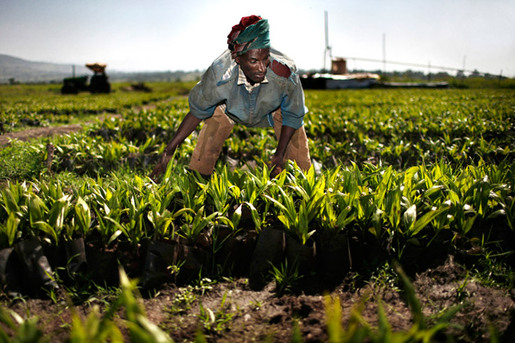
In a thorough first-of-its-kind study, the Brookings Institution made an excellent point: The African Growth and Opportunity Act (AGOA) of 2000 has always had an excellent opportunity of its own to actually benefit more than the handful of African countries its currently benefitting. To date, the biggest export to the U.S. under AGOA is oil from countries like Nigeria and Angola. South Africa exports Mercedes Benz parts, and of course, joins Lesotho, Kenya and Mauritius in exporting textiles and apparel.
Nonetheless, with AGOA up for renewal in 2015, Brookings creates post 2015 U.S. – Africa relationship scenarios; and of the five different models, we were most enamored by Category II: Expanding AGOA Product Eligibility.
If this came to fruition, Africa could really come alive. For starters, Brookings suggests that a change in the AGOA legislation to allow all 39 countries to export textiles and apparel would increase exports from Central Africa and West Africa up to 15 percent and 9 percent respectively. On the macro level, this may seem negligible – but for countries like Ethiopia, Mauritius, Zambia and Nigeria, this could be huge.
Away from apparel, this report is very clear: If African countries are allowed to export minerals, sugar, fish, cotton, cereals, tobacco, et al, this would ‘deliver significant and better distributed export benefits across African countries without affecting U.S. producers and exporters.
While unnecessary, a bygone and also premature, we must lament a loss. For the past decade or so, Africans have come to the AGOA discussion table – one negotiates agreements and not programs – and largely focused on whether to extend the different versions of legislation and for how long. Oftentimes, AGOA beneficiaries neither spoke with one voice nor made a strident case for what they really wanted. Well, this empirical analysis may be just what the doctor ordered! Africa now has a basis to demand for the kind of market access provisions they need and can take all the way to the bank.
So, let’s get this straight: We could say the Americans have been unfair; tell tales of how powerful the American farm lobby is – even go as far as suggesting that there’s some sort of Western conspiracy to keep Africa poor. However, in all fairness, blame must be put, squarely, at the feet of those who do not know how to ask for what they want or what is truly theirs.
The United States is the world’s largest market. Countries like Bangladesh and China do everything and anything to supply the American middle class with T-shirts and underwear.
Yes, along the way, children were abused, factories collapsed and people were/are almost enslaved to capitalism. But because of middle class consumer activism, we now know about child laborers; those countries breaking international labor conventions have been put on notice – and Bangladesh will have better buildings and rights for its garment factory workers. Interestingly, even China has to respond to an activist population in ways it never had to just 10 years ago.
If not for anything, Africa must push for a bigger share of AGOA because any change in foreign direct investments (FDI) and market access WILL take a few more people out of poverty. Unless they are more worried about giving their workers a few more rights, it is imperative that policy makers understand their options.
While the Brookings report provides ample ammunition, we also acknowledge that many African countries have legitimate reasons to protect the status quo. Some worry that if they ask for an improved AGOA like President Obama mentioned on his Africa trip, some in Congress may seek to delay or not renew their program. Or we may see the kind of delays that turn investors and buyers away from African apparel – important to Mauritius and South Africa. However, what is the point of having a dog with big teeth and a ferocious appetite if you cannot feed it the occasional bone?
The Habari Network Editorial Board | July 31, 2013