News
Antigua prime minister says Parliament will be dissolved
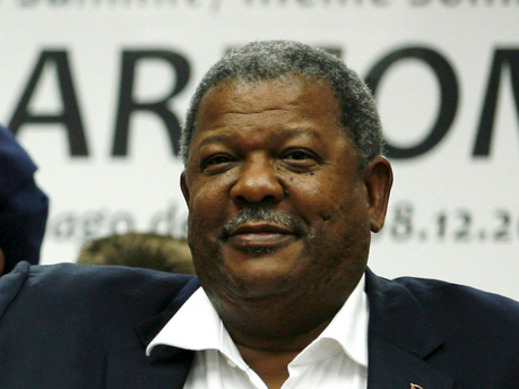
Prime Minister Baldwin Spencer says he will allow Parliament to be automatically be dissolved on Saturday and described as “unfortunate” the length of time taken by the OECS Supreme Court to deliver a judgment in two matters that could have had a bearing on the upcoming general elections.
In a radio and television broadcast on Thursday night, Prime Minister Spencer said also that should the court rule in favor of the government in the appeal matters filed by Gaston Browne, the leader of the main opposition Antigua Labor Party (ALP), “the Court’s extra ordinary and inexplicable delay will prevent any implementation of the proposed boundaries alterations approved by Parliament for this up-coming elections.
He said this is because Section 65(4) of the Constitution provides: “If any draft Order laid before the House under this section is approved by resolution of the House, the Prime Minister shall submit it to the Governor General, who shall make an Order in terms of the draft; and that Order shall come into force upon the next dissolution of Parliament after it is made”.
Spencer then stated in his broadcast, “Irrespective of the nature of the two decisions, it is most unfortunate that, notwithstanding the urgency expressed, including a letter to the Registrar General from the Attorney General some weeks after the two hearings, the Court has only been able to satisfy the public’s quest for and right to a judicial determination some two months after the urgent hearings.”
The Eastern Caribbean Supreme Court is expected to hand down its ruling on April 28 in the British Virgin Islands. It will determine whether the electoral list resulting from the September 30 to November 4, 2013 registration exercise is lawful and can be used for general elections.
The High Court had earlier ruled the list lawful, but the ALP appealed contending that the 2010 amendment to the electoral law, under which the registration exercise was conducted, ought not to have been applied retroactively. But Attorney General Justin Simon QC, one of the respondents to the ALP’s appeal, had argued that Parliament had the power to change the rules at any given time.
In the other matter, the Court of Appeal had been asked to ascertain whether the Boundaries Commission was fair in its preparation of its report, which the ALP said was biased and unfavorable to the party’s political candidates. Browne, speaking on a local radio here on Tuesday night, said he had no regret in filing the matters before the Appeals Court, saying it was in the best interest of the nation.
Browne also said, “So I want to make it abundantly clear that these litigations are really public interest litigations. They are not designed to score cheap political points…. We consulted widely, we consulted with James Gutherie Q.C in the United Kingdom, we all know Anthony Astaphan in Dominica, Elliot Mottley in Barbados and all of them unanimously agreed that there were elements of gerrymandering and there was certainly disenfranchisement and they advised us to take this matter to court. … So these litigations were not trivial in any way,” he added.
In his broadcast Prime Minister Spencer reminded citizens that he had stated earlier that he would not consider the dissolution of parliament or fix a date for general elections, constitutionally due by July 25, until the two judgments were delivered “given their significance to the current election process and out of respect for the Court as one of our public institution pillars”.
He said the appeals filed by the opposition made for urgent hearings given the impending general elections. He added, “In fact, a Consent Injunctive Order signed by both parties, following negotiations, was filed with the Court’s approval, which allowed the Constituencies Boundaries Report to be debated in Parliament in the interest of time, but stayed the making of an order by the Governor General, pending the determination of that matter by the Court of Appeal.”
He said that pursuant to section 60(2) of the Constitution, Parliament will automatically stand dissolved on Saturday April 26, 2014, five years after the first sitting of Parliament following its last dissolution, unless dissolved sooner by the Governor General on the advice of the Prime Minister in his absolute discretion.
“It is pellucid and clear that the Court will be delivering its judgment in both matters after – in fact, 2 days after – the automatic dissolution of Parliament,” Prime Minister Spencer said, adding “I will now await the judgments before saying anything more on the matter”.
Meanwhile, the Organization of American States (OAS) says its General Secretariat and the Antigua and Barbuda government have signed an agreement on the privileges and immunities of the members of the Electoral Observation Mission (EOM) that will be present during the general elections to be held at a yet to be determined this year.
The OAS said the agreement, signed at OAS headquarters “reflects the measures to safeguard the independence of the observers in the exercise of their functions, and determines the nature of the cooperation between the members of the mission and the national authorities”.
OAS Secretary General Jose Manuel Insulza said the 2014 elections in Antigua and Barbuda will be the second to feature the presence of an Electoral Observation Mission of the OAS, after those held in 2009. “The EOM will be installed about a week prior to the elections, and its work will include issues related to the observation of electoral justice, gender equity, political financing and the conditions of equality and transparency of the process,” he said.
Source: Caribbean360