Opinion
Angola’s lessons from Brazil

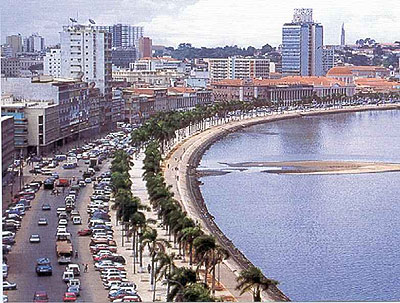
The old colonial capital of Luanda is being reborn. Work is well advanced on the new multibillion-dollar international airport.
Rows of luxury skyscrapers are under construction: for private apartments with astronomic rents to vie with Tokyo’s as the world’s highest, or for air-conditioned offices housing the latest multinational corporation taking its chance in one of Africa’s fastest-rising economies. Scores of multi-starred hotels have opened.
Yet many Angolans are asking how their Lusophone cousins in Brazil – plagued by the colonial legacy, living in the shadow of United States power in Latin America, together with decades of corrupt and oppressive military rule – broke their own vicious cycle.
Over the past three decades, Brazil has established an independent and productive economic direction.
Former president Luiz Inácio Lula da Silva made progress in fighting the deep inequalities, which were among the most extreme in the world.
His weapons were mass employment, training schemes and social protection measures for the poorest.
Closed Circle
To emulate that, Angola will have to switch from its current path as a state dependent on oil to one committed to production and investment, opening up decision-making to more than the select few.
A Luanda-based business- man who used to live in Brazil explained the differences: “In Angola, it’s run by a much smaller community of politicians, a very closed circle, the same circle for a long time. And that circle is much closer because of the war. You still have the same big men around – generals who are deciding policies but also involved in the economy.”
Across the Atlantic, the politics is more dynamic, he says: “In Brazil, the people directly elect the president.
They like someone who talks about basic things like food, schools and jobs. That’s why Lula was very popular. In Angola, the president wasn’t really elected by the people, so the speech doesn’t need to be so populist.”
Angola’s own tortured history – centuries of Portuguese rule followed by a devastating 27-year civil war – weighs heavily on its politics, to the frustration of a new generation of Angolans.
They cannot see why a country of 20 million people and one of the richest resource endowments in the developing world should not be at the leading edge of Africa’s development, let alone unable to provide decent schools, homes and jobs for its people.
Social media sites such as Twitter and Facebook resound with younger Angolans’ critiques and jibes against the ruling class.
But even Angolan officials say more could have been done since the war. “We should by now have a productive non-oil sector, whether agriculture or industry. A number of basic steps need to be taken before investors can actually seriously invest in Angola,” a senior official working on economic policy told The Africa Report.
“Roads, infrastructure, energy and water, most of these things are still hard to get outside of Luanda, which makes it hard because you’re not going to put a factory or big industrial project within Luanda. Also, you need raw materials, and a lot of these are still imported,” he continued.
Since the civil war, Angola recorded world-beating growth rates as it rebuilt its devastated roads, bridges, ports and power stations. More state-funded grands projets are in the works; even new cities are planned, although the older cities are in dire need of renovation. Yet the new cityscapes, added office and apartment blocks and freshly built highways take on the appearance of a Hollywood film set.
For beyond the marble-floored hotels hosting epic parties is the stultifying reality in which most Angolans live.These political and social realities are far from frozen, however. There is no shortage of well-argued policy planning documents such as Visão 2025 (Vision 2025). Its main aim is to spur job creation by diversifying the economy away from oil.
According to the International Monetary Fund’s latest report in June: “With oil alone accounting for over 95% of its export revenue, Angola is the least export-diverse country in Africa, and rivals Iraq for least export-diverse worldwide. “Well-educated Angolans are returning home in droves. Those who get the top jobs buy – or more often rent – new apartments and try to get their children places at the international schools.
Portuguese job-seekers
But there is still a chronic shortage of middle managers across the economy. Here, the economic travails of southern Europe are helping. Reversing the pattern of the war years, an orderly queue of visa-seeking Portuguese workers snakes around the corner from Angola’s embassy on Lisbon’s Avenida República.
These days business is less brisk at the Portuguese consulate in Luanda. Angola’s elite may be buying up banks and insurance companies in Europe, but the preferred holiday destinations are Rio and Cape Town. This migration of Portuguese workers reflects both Europe’s financial woes and the continuing crisis in Angola’s growing number of schools and universities.
“We have an issue of quality, not quantity,” says a senior official in the government who has worked overseas, and who explains that the government is reviewing the national curriculum. “There is a long list of people who have got degrees from private universities in Angola that are not accredited. These were diploma mills. People would pay a few hundred dollars a month, and whether or not they per- formed they would get a degree at the end of a few years,” he explains.
Most of these people end up working in the civil service. The better educated are too precious to the private sector, especially the oil industry. But this is changing, the official claims. The government has set up a training programme with the goal of educating 80,000 professionals, mostly in the applied sciences, within five years.
Lack of capacity at the municipal level is cited as a problem, as well as a reason why decentralisation has stalled. But activists say party hacks and bureaucrats fear losing control. Officials admit that although development is not skewed towards Luanda, decision-making is.
For example, the governor of Benguela Province can propose a project to the environment minister in Luanda. The minister can accept the plan, get it approved in the national budget and then implement it in a different province. Public works and centralised payments are also a problem, the official adds: “What happens when you have a great company doing great work in Moxico Province if they don’t get paid by the central government? There is nothing local government can do about it.”
Companies constrained
Shortcomings in institutional capacity and in physical infrastructure are limiting companies and pushing up their costs, according to João Cândido Fonseca, executive director of Banco Angolano de Investimentos (BAI). He justifies conservative lending policies: “Companies say the banks are too bureaucratic, but we need information and solid, well-run companies to provide financing.”
BAI, says Fonseca, looks both at a company’s assets and the quality of its management: “Companies here usually have very low equity. And if it is too low, this is also a constraint for them to access financing. Banks don’t just look for guarantees, they also look at the repayment capacity.”
Outside the oil industry, private companies remain dependent on state spending: “If the government doesn’t keep a regular payment flow to its suppliers,” says Fonseca, “those companies will face difficulties including defaulting on loans. It is important that government keeps regular payments to its suppliers, especially small and medium-sized companies that have less access to finance.”
For banks and other financial institutions, supervision and regulation are becoming more pressing as the volume of business grows in line with the wider economy. “There is a real gap in knowledge,” says Fonseca, “even more with the new foreign exchange regime because oil companies that operate in Angola are used to an international environment.” Like other business people in Luanda, Fonseca laments that “when we do have good people, oil companies hire them.”
Despite the difficulties, the banking and service sector is growing, broadening the base of the economy. The barons of the ruling Movimento Popular de Libertação de Angola (MPLA) see this ambivalently. The burgeoning middle classes may have resources and time to articulate the grievances of the poor, and its activists have the daring to expose malfeasance.
For now, the political system looks robust with the main opposition União Nacional para a Independência Total de Angola apparently coopted into the system. President José Eduardo dos Santos, in power since 1979, sporadically announces without enthusiasm that he plans to step down, but there are no signs this is imminent.
The overwhelming power of the presidency at Futungo de Belas and its extensive network of family and political ties mean that change at the top could have seismic effects. The MPLA, a disciplined party in a growing economy, may have the chance to plan and manage the succession.
Much depends on the timing and context. A sharp deterioration in economic conditions caused by a global slump in oil prices could cause difficulties. Some oil experts predict the doubling of oil production if new presalt finds are deemed commercially viable.
Others question this: “I don’t believe that – even if Angola has the capacity to double production. If you continue to produce 22.3m barrels per day (bpd) instead of 4m bpd, you allow your country to produce oil for 60 more years,” says one oil company executive based in Luanda.” Instead, he sees more modest increases in production in the medium term.
Oiling the succession
Oil remains critical, which helps explain why the former chief of Sonangol and current vicepresident Manuel Vicente is being groomed to take over from Dos Santos. Some politicians are uneasy about the ascendancy of a mainly technocratic figure. Others ask how they could benefit as national capitalists from a diversified economy.
It would mean moving towards productive investment and restricting the businesspeople who make their money from trading oil, over priced procurement contracts and as monopoly suppliers to the state. Businessmen remain skeptical about radical policy shifts: “I’m not expect ing to see big increases in local and value added production, mainly because of the cost of labor, land, energy and the rental of space – but also in terms of corruption and the indirect costs that you have to battle with,” a foreign business executive in Luanda explains.
With oil production and prices stay ing strong and revenue boosted by new liquefied natural gas exports, Angola’s rulers may think they can postpone some hard decisions. But with changing global economics trends and the shale gas revolution, Angola could lose its oil advantage while local economic troubles build up.
Add that to the widespread anger about social conditions and the country’s postwar compact could start facing real political pressure from the frustrated younger generation.
Copyright The Africa Report 2014