Business
Angola: New tax imposed on oil companies – closes loophole, benefits country
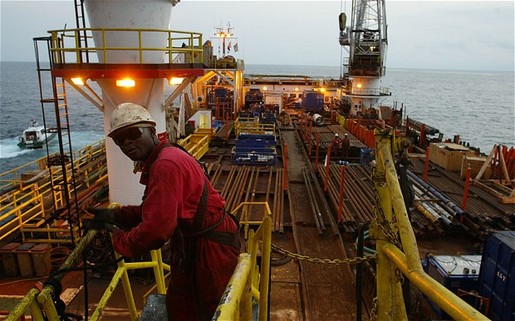
Oil worker on rig of Angolan coast. PHOTO/AFP
(Bloomberg) – Angola, Africa’s largest oil producer after Nigeria, is imposing a consumption tax on petroleum companies that will raise some costs by as much as 10 percent, according to government documents.
The law, which comes into effect with its publication that may happen as early as today, requires companies to follow a tax schedule that adds five percent to most services and supplies and double that for equipment rentals.
Angola set up a special tax reform branch in 2010 to work with government ministries on increasing revenue and closing loopholes in a bid to simplify taxation. The southwest African country, a member of the Organization of Petroleum Exporting Countries (OPEC), pumped about 1.74 million barrels a day in September from offshore fields, according to the latest data available.
Oil companies have benefited from tax exemptions even as government reforms have expanded the net of taxable services, closing the loopholes in the fiscal system will bring greater tax justice and taxpayer confidence across all industries while making good economic sense.
Companies spend about US$20 billion a year in petroleum exploration and production in Angola, according to information availed by the Luanda-based Oilfield Support Angola Lda. Tapping fields under one mile of ocean and three miles below the seabed tests limits of current technology. Luanda, the capital of Angola is ranked the world’s most expensive city for expatriates with an oil-driven economy that has inflated prices. Angola continuing to recover rapidly from a 27-year civil war that ended in 2002.
BP PLC, ConocoPhillips and Statoil ASA are among oil explorers investing at least US$3 billion in wells off Angola next year. The companies will drill 20 wells at a cost of US$150 million each.
The government’s tax reform branch plans to simplify and modernize codes while boosting revenue, Gilberto Luther, director of the reform project, said in an interview in April.
By 2017 or soon after, a value-added tax on finished products and services will replace the consumption tax that’s charged on each stage of manufacturing, Luther said. The new levy will cut the “cascading effect” of the current tax, which increases inflation by making prices higher than a lone tariff on the final product, he said.
Discussions were under way at state petroleum company Sonangol EP, the Ministry of Petroleum and among oil officials about whether to reduce the industry’s tax exemptions for raw materials and trim the current 90 days that oil companies are allowed to finish a customs declaration, Nicholas Neto, head of the Policy and Procedures Department Angola’s National Customs Service, said in an interview in May.