Business
Africa growth expected to continue – to hit 6% in 2014
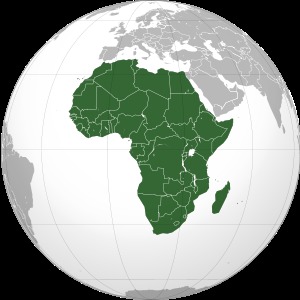
(Reuters) – Sub-Saharan Africa’s economic growth is expected to increase to 6 percent in 2014, from 5 percent this year, supported by investment in infrastructure and production capacity, the International Monetary Fund (IMF) said on Thursday.
The IMF had predicted in May that the region would grow 5.7 percent this year and 6.1 percent in 2014.
It said the slight downward revisions were due mainly to weaker global economic conditions, while budget delays in oil producer Angola and oil theft in Africa’s top crude exporter Nigeria also hurt growth.
Inflation on the continent is expected to be less than 6 percent next year, its third year of decline due to benign prospects for food prices and the continuation of prudent monetary policies.
“The improvement relative to 2013 reflects higher global growth, especially in Europe, and other expected favorable domestic conditions including as an example, Nigeria’s electricity reforms and hopes of improved oil output.
The main factor behind the continuing underlying growth in most of the region is strong domestic demand, especially associated with investment in infrastructure and export capacity in many countries.
Despite the strong growth outlook, the region remains vulnerable to lower commodity prices and a slowdown in developed and emerging economies.
The strongest growth will be felt in mineral-exporting and low-income countries, including the Ivory Coast, the Democratic Republic of Congo, Mozambique and Sierra Leone.
Africa’s largest economy South Africa is expected to grow 2 percent this year and 2.9 percent in the next, as it lags the broader region due to the relative maturity of its industrial, extractive and services sectors.
South Africa has suffered this year from industrial strikes, slowing private investment and disposable income growth and weakening consumer confidence.
The World Bank sees growth of 5.3 percent for sub-Saharan Africa in 2014, underpinned by strong private and public investment.