Editorial
Uganda anti-gay bill: A Misguided Policy
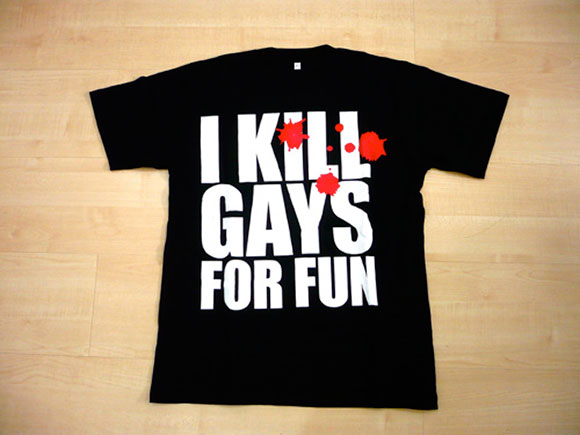
By Christmas Eve of 2012, it was apparent that on top of a general paucity that comes with being one of the world’s poorest countries, Ugandans were not going to receive the ‘Christmas Gift’ their own Speaker of Parliament promised them. In perhaps what some may consider a logical political calculus, Speaker Rebecca Kadaga – Uganda’s first female one – gave in to the people’s demands, tethered herself to the infamous ‘Kill the Gays Bill’ and promised to deliver to her country a law that would not only stave off the onslaught of homosexuals but also protect their innocence of Ugandan children.
First introduced in 2009 by Member of Parliament (MP) David Bahati of the ruling and majority National Resistance Movement (NRM) party, the ‘Kill the Gays Bill’ reached the international scene at almost the same level as Idi Amin, Joseph Kony and HIV/AIDS. And due to its apparent death wish for people of alternate sexuality, the international community rightfully protested – cornering Uganda’s all-powerful President Yoweri Museveni – and eventually, getting Uganda to capitulate in removing it from parliament.
That was 2010. In 2012, the anti-gay bill is back, sans the death penalty. That the bill is now at parliamentary committee status, basically a few steps from a floor vote where it will most likely pass, is indicative of what kind of strategic considerations are being made by Uganda’s political cognoscenti. In essence, just like no Republican in the US Congress wants to be associated with an increase in taxes, a Ugandan member of parliament would not want to be seen as the one who launched homosexuality at his or her community doorstep.
Although Uganda already has laws that penalize gay sexual acts, the proposed legislation is especially meant to be pernicious to those ‘monied external influences’ from destroying African culture by imposing harsh incarceration and even life imprisonment for those who have sex with minors, the disabled and also those who infect them with HIV/AIDS.
But just like the push for the original anti gay legislation was allegedly driven by a nascent relationship between Hon. Bahati and America’s conservative lawmakers, some believe that this 2012 effort by the Speaker is also in response to external stimuli. After all, in early 2010, Museveni cited the immense pressure he was receiving from external donors as a reason to urge his party to cool its heel on those gay things.
Nonetheless, 2012 was an especially bad year for the Ugandan President, the NRM party and the country as a whole. In the same year that Joyce Banda peacefully ascended the Malawi Presidency as Africa’s second female leader, and just as John Mahama notched another political win for Ghana in the eyes of those watching for political transition, Uganda was, once again caught with its hand up the Congo’s skirts. Even worse, the Ugandan Prime Minister’s office was embroiled in a misappropriation of funds scandal – one in much bigger proportions than the Global Fund one of 2006 and the Commonwealth Heads of Government Meeting (CHOGM) one of 2008, with the latter claiming the political life of Uganda’s long standing Vice President, Prof. Gilbert Bukenya.
This most recent scandal even tarred the country’s supposedly squeaky-clean First lady and led to European donors including the United Kingdom, Ireland and Denmark cutting the aid lifelines to Uganda’s coffers.
Thus, the re-introduction of the ‘Kill the Gays Bill’ could have been a political ploy to extract concessions from Western donors – in the same mold that North Korea continues to pursue its nuclear program. In fact, another scenario – the recent ‘tiff’ between Museveni and major oil companies over revenue and refineries – could also be resultant of the need to pressure the west to back off whatever reprisal(s) might be in the offing.
On the other hand, Speaker Kadaga’s ‘gift’ was right on the money. Homosexuality, especially that one involving men, is abhorred in Ugandan society. As seen from the protests and media responses between 2009 and the present day, many see these acts as against nature and in direct contradiction to the values of the overwhelmingly religious country of both Christians and Muslims. Many of these contend that homosexuality and sexual pervasion are aspects of Western import – missing the irony that their own religion is, in fact, the biggest import of them all. And even when media reports showed a flamboyant sportsman engaged in gay sex – someone who was rumored to be gay since the early 1980s – the west received the brunt of the public’s anger for availing him political asylum.
Some even believe that homosexuality is a bigger threat to national security than corruption.
The Uganda Law Society and mainstream religious groups follow South Africa’s Archbishop Desmond Tutu in preaching tolerance – not for homosexuality but for the aegis of human rights which they believe this legislation goes against. Jurists also point out that despite the law being on the books since the country’s 1962 independence and throughout the country’s different constitutions, this has not stopped the country’s mostly Pentecostal Christian movement from pushing for additional changes. Parents, siblings, relatives, friends and acquaintances are compelled by this new proposed law to ‘snitch’ on those they believe are again on pain of they, themselves, being brought up on accessory charges.
This has to be one of the biggest weaknesses of proposed legislation. On top of being in direct contravention of pacta sunt servanda, this law seems to borrow from the most nebulous of Hitler’s Germany where Jews were sold out by their neighbors, and also from Josef Stalin’s USSR where millions were sent to Siberian gulags or to their death. Nonetheless, during this festive season, when most Ugandans celebrate a time of family and hard work, Speaker Kadaga has not delivered what she promised.
Many will not understand how something as black and white as this cannot be passed. They will blame money. They will blame the western colonialists. They may even blame the woman who opened the country’s first female owned law chambers from marshaling an important law through her august body. In the meantime, homosexuals will continue to dwell in the “Pearl of Africa”.
Dennis Matanda
Editor – editor@thehabarinetwork.com
Editor’s Note: We shall run additional features on Uganda’s anti gay bill in our Opinion section.