Editorial
A Glimmer of Hope for Africa
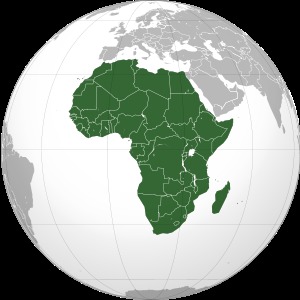
Over the next three weeks, the Editorial Team here at The Habari Network is going to be busier than a hive of bees. Not only are we in the throes of publishing our first hard copy magazine: It will be a full-throated effort to make the case for the ideal commercial relationship between the world’s largest economy and what could be the fastest growing region and savior of the global consumer trend.
Simply, the value of gathering some of the most influential thinkers and decision makers to explore what else could be done about the natural synergies that exist between the U.S. and sub Saharan Africa is not in doubt. In fact, if all goes well, Africa may just have its answer to a collective blueprint on how to deal with the Americans.
This is not to say that the thirteen years of the African Growth and Opportunity Act (AGOA) have not been beneficial to Africa. But for all intents and purposes, preference programs like AGOA can only do so much since one cannot necessarily negotiate anything.
The U.S., under the circumstances, is at liberty to give you what it deems fit. And also, market access provision programs like AGOA can only be relevant if they keep with the times. Formulated in 2000 – in an era when Africa was not necessarily the bright spot it is today – this program basically took the overall aspects of aid to another level. Africans were simply asked to try and deliver products that the American MIGHT purchase. Americans, thus, bought so much oil from Africa – and not much else.
Countries like Nigeria and Angola were the first out the gate and these have made significant gains. But at what expense?
Here, export diversification in Nigeria has, for instance, been stunted. In fact, while then President Olesegun Obasanjo called for a balance between oil exports and exports of other Nigerian products under AGOA, things in 2013 are so much worse.
Oil exports contribute more than 95 percent of all AGOA exports from Africa. Now, just think what a decrease of 10 percent can do to agricultural farmers in Malawi and Senegal?
If Africa exported more crops – taking up to 15 percent of AGOA exports – this would be a good thing all around. Countries like Ethiopia and Rwanda are doing something about it.
Fortunately for Africa, there’s a good man in the Executive Offices of the White House. And here, we do not mean President Obama. In fact, the man we refer to is the President’s chief trade advisor. As U.S. Trade Representative, Ambassador Michael Froman has asked for a review of the U.S – Africa trade dynamic. He is asking people to evaluate changes to fundamental things like rules of origin which have worked wonders for Africa’s textile export sector, he wants to find out what the trade relationship between South Africa and the rest of Africa means to the U.S. and to Europe; the list goes on.
As a result, trade policy people such as ourselves are rubbing our hands in glee. And these are indeed exciting times for us. Perhaps, we shall start to really influence policy and change the dynamic of Africa’s place in American minds. Or perhaps, we are being too optimistic since many do not share our enthusiasm.
The Habari Network Editorial Board
November 18, 2013