
Politics
Election 2012: Federal court examines South Carolina voter ID laws
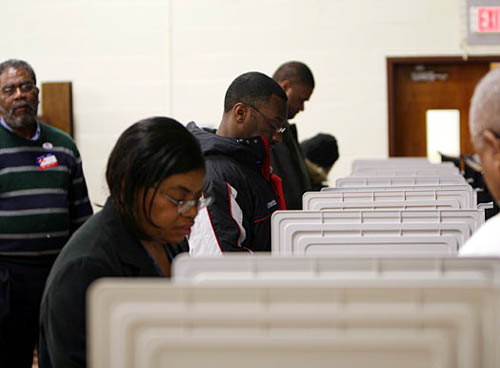
In his opening statement at trial, attorney for South Carolina Christopher Bartolomucci said the law was not a direct response to the 2008 record minority turnout that helped put Obama win the White House.
State witnesses said they wanted to instill public confidence in the election system and curb fraud, although they were unable to turn up instances of impersonation fraud that photo ID laws are designed to thwart. But South Carolina lawmakers testified the law would also act as a deterrent to other types of fraud.
South Carolina’s population is 64 percent white, 28 percent African-American and 5 percent Hispanic. State election data produced in the trial showed some 178,000 registered voters did not have DMV-issued identification. Of those, 30 percent were white and 36 percent were minority voters. The data did not show if they had the other accepted IDs.
The judges in the case honed in on part of the law allowing voters without the required identification to cast a provisional ballot. But they must sign a statement that says they had a “reasonable impediment” preventing them from obtaining one of the required IDs. The affidavit would have to be notarized.
Marci Andino, South Carolina’s State Election Commission executive director, testified poll workers would be encouraged to err on the side of voters in deciding whether the potential voter truly had a “reasonable impediment.” Notaries at the 2,100 polling locations would not charge fees, she said. If a notary was not available, affidavits would be accepted anyway, Andino said.
The U.S. Supreme Court has previously upheld Georgia and Indiana voter photo identification laws, which South Carolina officials said served as models and guidance for their law. But those state laws allow voters to show more forms of identification.
Attorneys for the Justice Department and opponents have argued the provision’s definition of what qualifies as a reasonable impediment is vague and could be applied differently from county to county. Opponents raised enough questions that South Carolina Attorney General Glen Wilson was compelled to clarify before the trial ended how the law would work.
